Semiconductor manufacturing is usually discussed in terms of fabs, supply chains, downstreaming, geopolitics, and national industrial strategy. But many of the next constraints sit several layers below it.
This advanced manufacturing base, now centered in Asia, still has to turn installed fab capacity into yield-adjusted output. Without adding another fab, advances in materials, packaging, cooling, and process control can shift the operating limits of existing manufacturing capacity.
Ultrapure water, chemical management, separation systems, contamination control, wastewater treatment, and resource recovery are among the systems within the semiconductor manufacturing environment that shape repeatable production. They sit underneath yield, uptime, and the usable output of advanced manufacturing capacity.
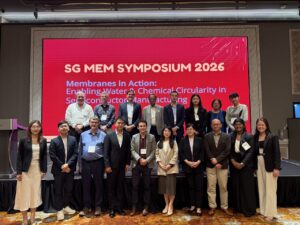
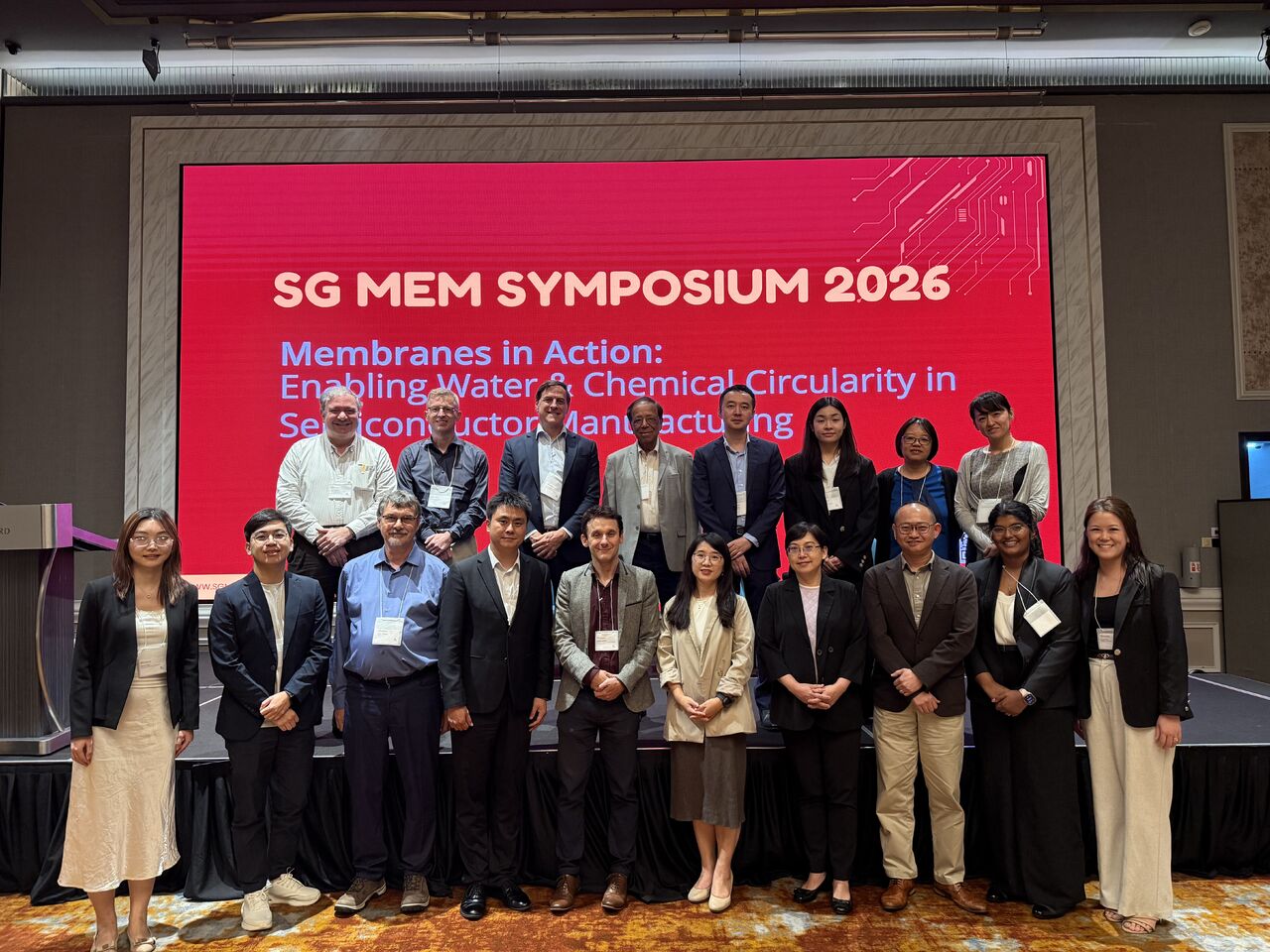
On June 22, our Founder & Managing Partner Michael Gryseels joined the Singapore Membrane Consortium’s Annual Symposium 2026, “Membranes in Action: Enabling Water & Chemical Circularity in Semiconductor Manufacturing,” alongside: Kunal Shah of Singapore Water Association, Yan Gu of PUB, Singapore’s National Water Agency, and Choon Siong KHO of Singapore’s Ministry of Sustainability and the Environment. The session was moderated by Prof. Dibakar Bhattacharyya, a membrane science expert from the University of Kentucky.
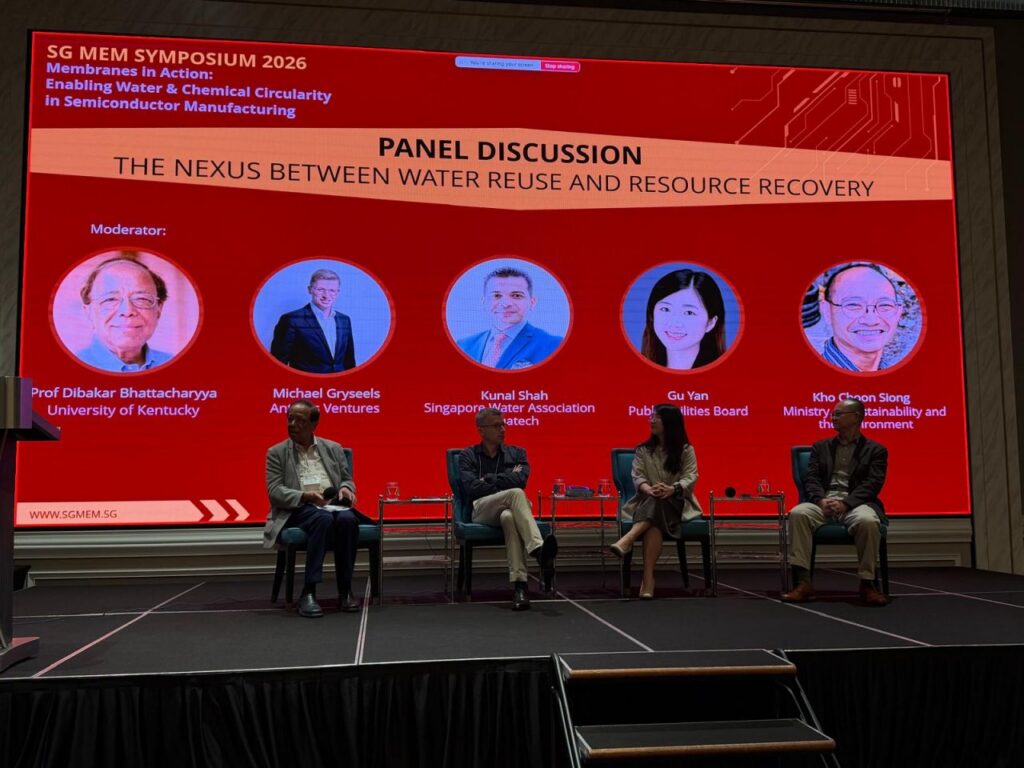
The panel agenda placed water recycling and resource recovery alongside semiconductor circularity, ultrapure-water requirements, water cost, and the barriers that stand between technology development and use in fabrication.
These questions sit within the same manufacturing environment. Water recovery, chemical recovery, metals recovery, contamination control, and wastewater treatment each carry their own technical and commercial conditions, while also affecting the wider economics and reliability of production.
For a technology entering semiconductor manufacturing, laboratory performance is only one part of the path. The operating environment introduces economics, qualification, integration, reliability, customer requirements, and the risk attached to changing a live production system.
During the panel, Michael highlighted the barriers to scale-up, the coordination required across end users, governments, technology providers, and investors, and the signals that distinguish an investable technology from one that remains too early.
The distance between laboratory performance and fabrication use is where many promising technologies are tested most directly. The question is whether they can hold performance under production conditions and fit within the industrial, commercial, and operational realities of the customer.
Antares sits across the point where energy, compute, and industrial systems meet. In compute, the focus is on the materials, power delivery, cooling, advanced packaging, and real-asset infrastructure that physically enable scale. In manufacturing, it is on advanced production technologies, process engineering, sensing and control, and treatment, separation, and recovery systems that shape how industrial assets perform.
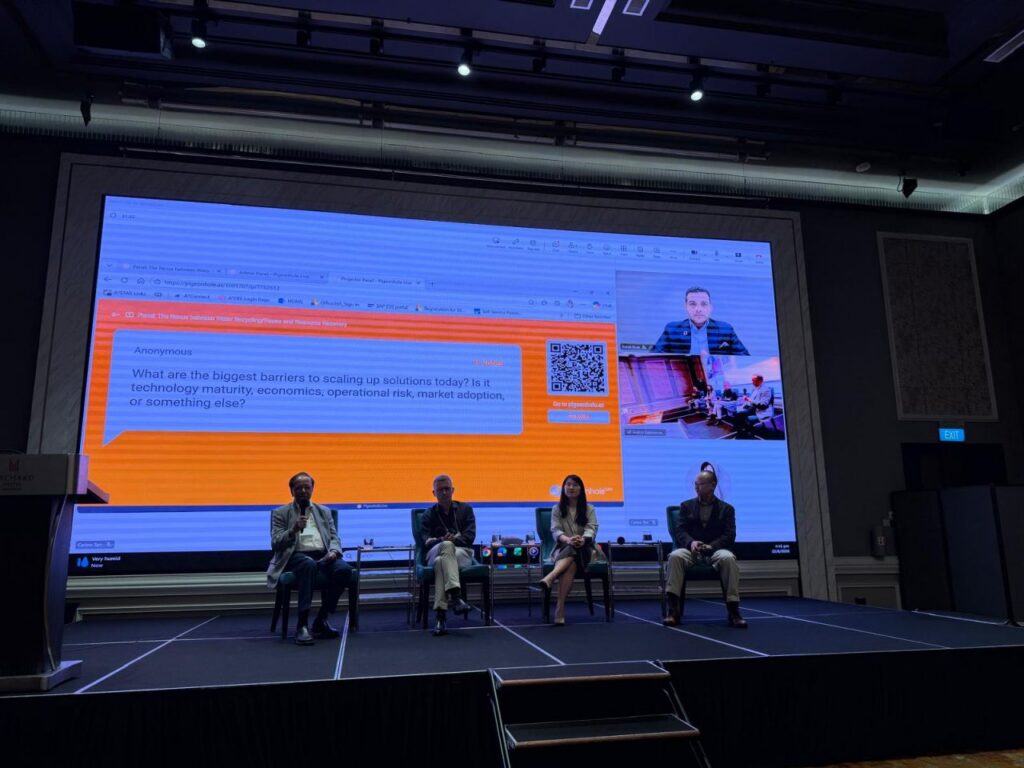
Membranes sit within this overlap when separation or recovery affects a manufacturing constraint. While the thematic provides an entry point; the investment question remains whether the technology can improve the productive performance or economics of a capital-intensive system and move through qualification into commercial deployment.
Advanced compute does not end at the chip. It depends on the manufacturing systems that make the chip possible
***
If you work or invest around compute infrastructure and advanced manufacturing, we welcome the conversation. CONTACT US.