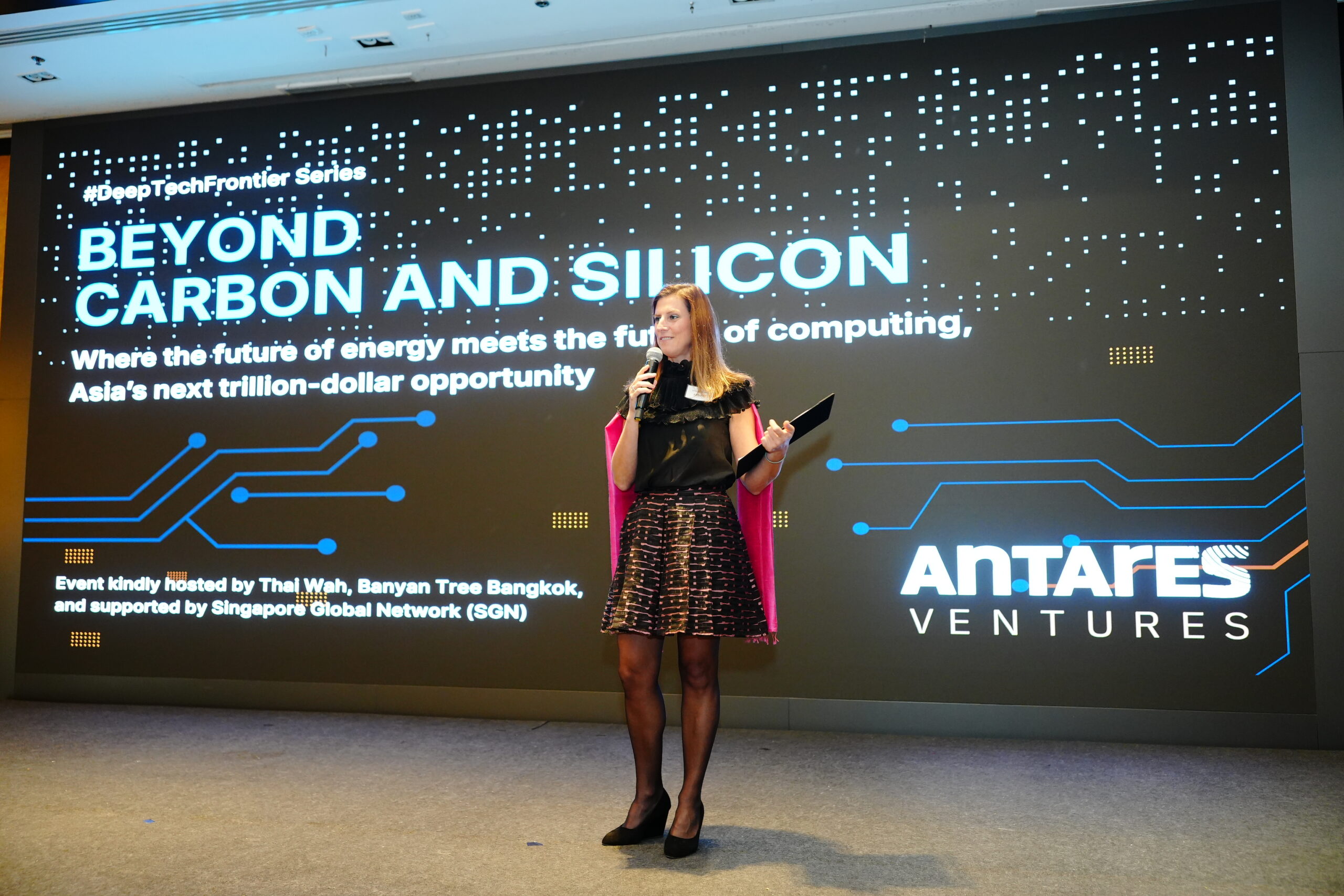
On November 6, 2025, Antares Ventures convened the Bangkok edition of Beyond Carbon & Silicon at Banyan Tree Bangkok, with support from Thai Wah Public Company Limited, Banyan Tree Bangkok, and Singapore Global Network.
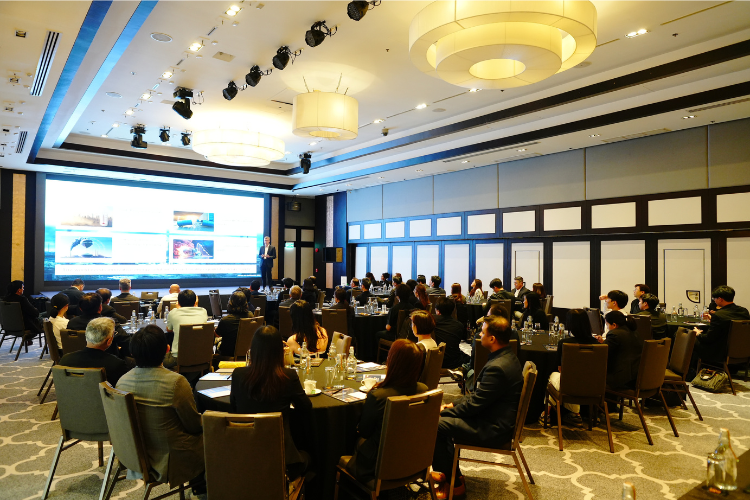
The forum brought together more than 70 investors, corporate leaders, family offices, corporate venture capital leaders, strategic investors, and deep-tech founders from Thailand and Southeast Asia to explore how the convergence of energy and computing is reshaping competitiveness across Asia’s growth markets.
For decades, carbon and silicon powered global growth, one fueling energy and the other enabling computation. Both are now reaching limits. As AI, data infrastructure, cooling demand, and industrial electrification scale, the future of energy and computing is becoming one system, each increasingly dependent on the other.
Asia sits at this intersection, where rising heat, rapid urbanization, fragile grids, growing data center demand, and industrial decarbonization pressures meet distinct regional advantages: renewable resources, founders who think globally, growing capital depth, and corporates ready to act. The region is becoming a proving ground for whether this convergence can scale and deliver resilience, productivity, and competitiveness.
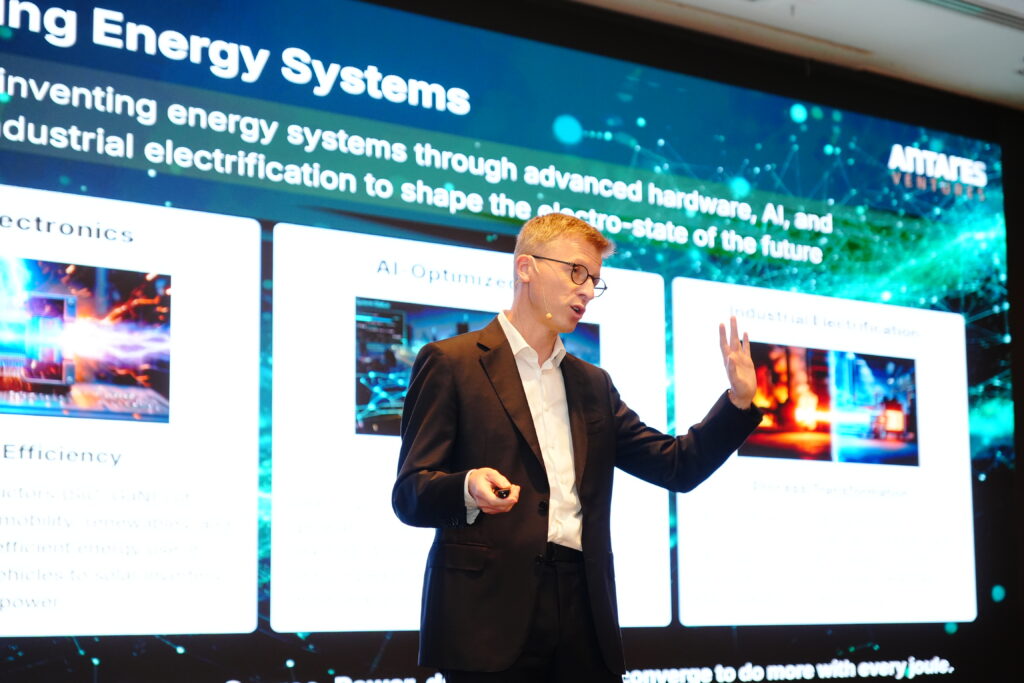
Across the keynote sessions, Michael Gryseels, Founder & Managing Partner of Antares Ventures, and Vishal Devarajan, Associate Partner at McKinsey & Company, discussed how AI and data centers are driving exponential energy demand, how hydrogen, nuclear, and storage technologies rely on computing for modeling and control, and how scaling deep tech demands a shift in how competitiveness is built.
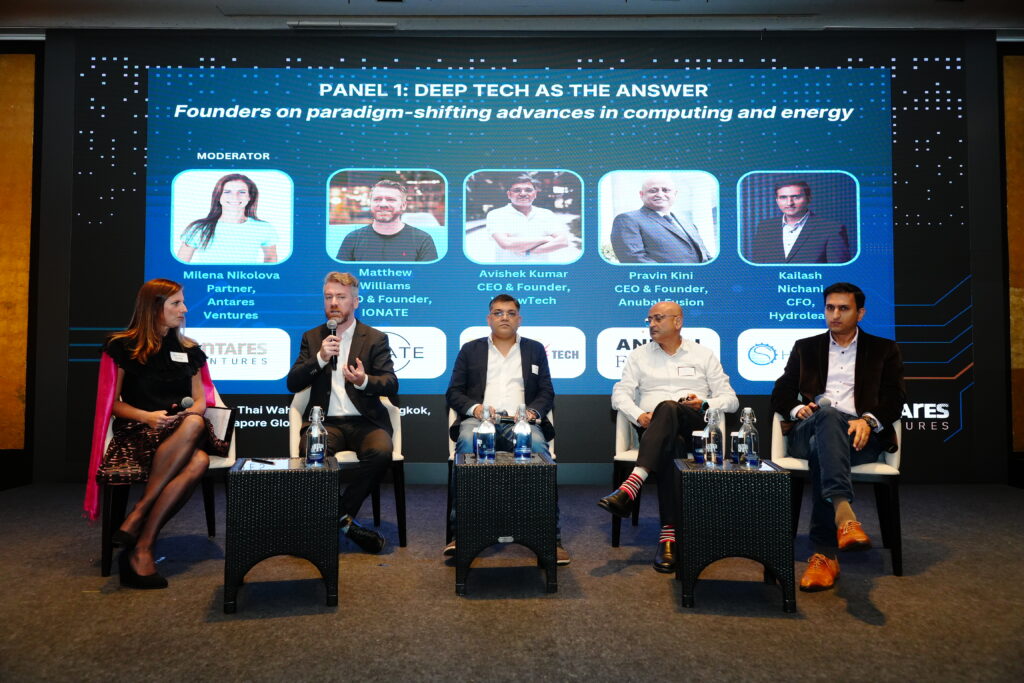
Led by our Partner Milena Nikolova, the first panel focused on how deep-tech founders are addressing the twin pressures of energy and compute. Matthew Williams of IONATE, Avishek Kumar of VFlowTech, Pravin Kini of Anubal Fusion, and Kailash Nichani of Hydroleap discussed how technologies across intelligent transformers, energy storage, nuclear fusion, and water and cooling systems are moving from pilots toward revenue-generating scale.
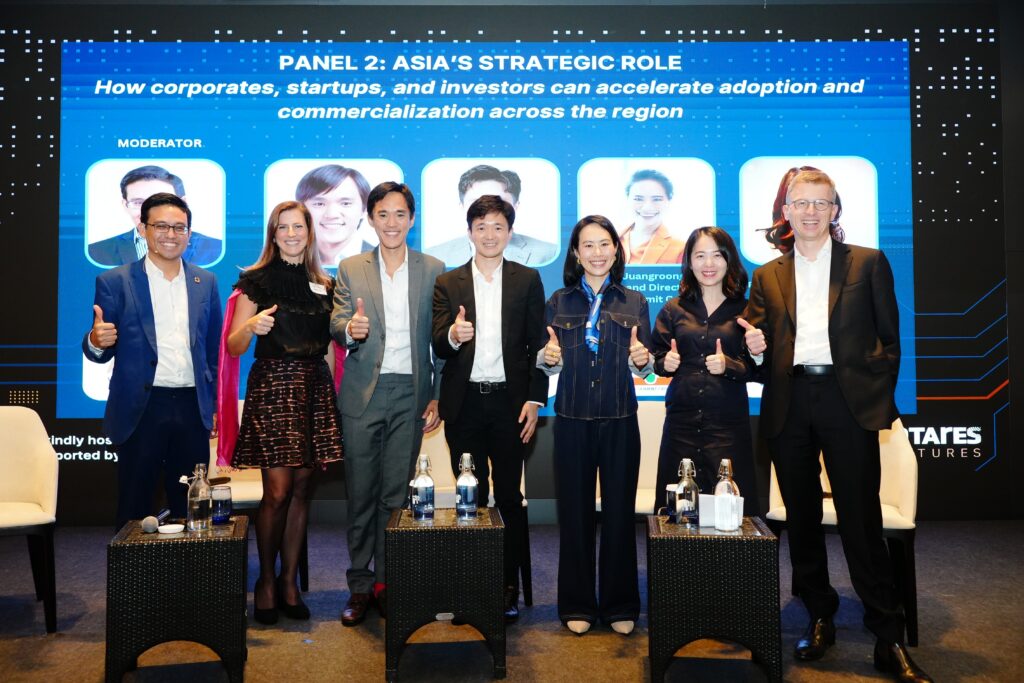
Led by Thailand’s Senior Advisor Sam Tanskul, the second panel examined Asia’s strategic role in accelerating adoption and commercialization. Ren Hua Ho of Thai Wah Public Company Limited, Varut Tummavaranukub of Sermsang Power Corporation PLC, Chanapun Juangroongruangkit of Thai Summit Group, and Peeranuch Wannasirikul of BANPU Public Company Limited discussed how corporates can support deep-tech deployment beyond capital, including through sites, data, offtake commitments, open innovation models, and early procurement pathways.
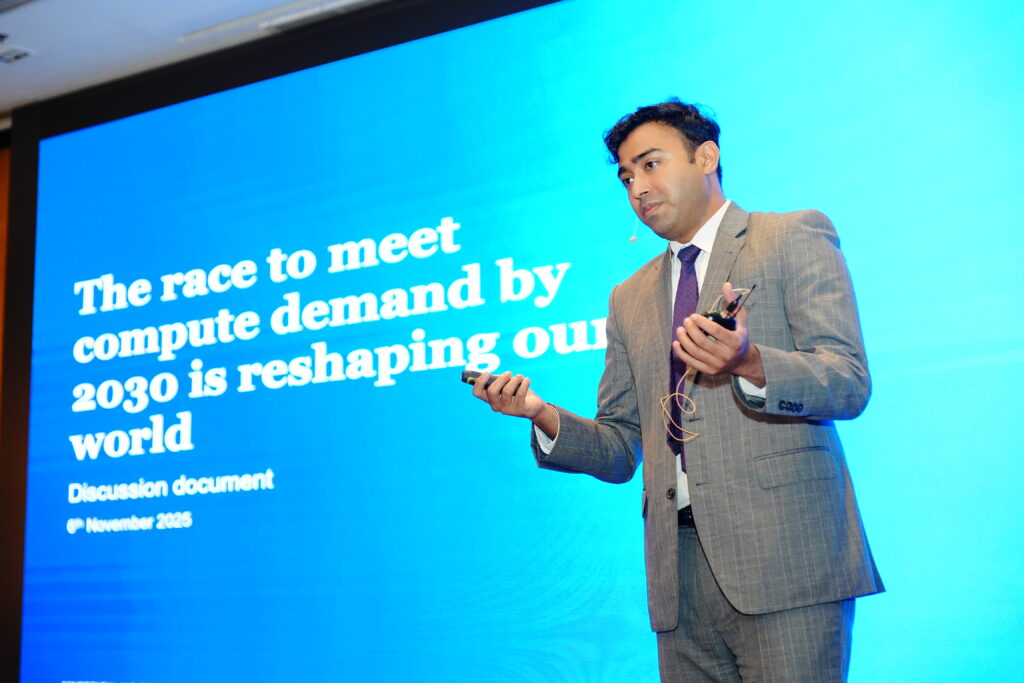
Across panels and receptions, it became clear that Asia’s deep-tech ecosystem is building on its own foundations. Founders spoke about talent, local manufacturing, and grid readiness. Corporates examined pilot models and industrial integration. Investors explored how capital structures and partnerships can accelerate adoption across growth markets.
Scientific breakthroughs may be global, but deployment, value chains, and commercialization are increasingly regional. Asia’s advantage lies in its industrial capacity and in ecosystems that align technology, capital, and industry into scalable systems with purpose and precision.

Antares Ventures thanks Thai Wah Public Company Limited, Banyan Tree Bangkok, Singapore Global Network, all speakers, partners, founders, investors, and participants who shaped the Bangkok dialogue.
The transition beyond carbon and silicon is not only a technology shift. It is becoming part of how Asia’s next industrial cycle is built.