
Leipzig & Singapore, September 26, 2025 – Antares Ventures, a specialist deep-tech venture capital fund focused on Asia Growth Markets, today announced its participation in the €7 million seed round of enaDyne, a Germany-based startup developing a modular non-thermal plasma catalysis reactors that abate and convert various greenhouse gases (GHG) into valuable chemicals.
enaDyne solves two problems at once: it cuts stubborn industrial emissions and turns them into basic chemicals such as ethylene and methanol, essentials feedstocks for industries like packaging, textiles, and electronics.

Louis Murayama, Partner of Antares Ventures, said, “Cold plasma was long expected to disrupt chemical processes, but it was hard to make it work outside the lab. It is truly remarkable that enaDyne’s multi-disciplinary team is finally making it commercially deployable and there is nothing more exciting to help scale their innovation to the Asian market.”
For Asia, with fast-growing manufacturing, large semiconductor footprints, and a heavy reliance on imported petrochemicals, the impact is practical: cleaner air and more local production. enaDyne’s modular container units sit beside existing lines, run on electricity, and ramp with demand, so plants can cut emissions and make core feedstocks in the same step, without flares or burners and with the option to use renewable power.
Louis added, “At Antares, we see industrial decarbonisation and resource independence as a defining opportunity for Asia’s growth. enaDyne’s products can serve various industries such as semiconductor fabs, petrochemical plants, and biogas facilities. Through our connectivity, we look forward to scaling enaDyne’s business in Asia while delivering cleaner air and greater resource independence all at once.”

Philipp Hahn, Co-Founder and CEO of enaDyne, said, “The chemical industry has been locked into fossil-dependent processes for over a century – we’re breaking that dependency with pure electricity and precision. Our plasma technology doesn’t just compete with traditional chemistry, it fundamentally reimagines it. We can switch our reactors on and off like a light switch, deploy them anywhere renewable energy exists, and serve both conventional syntheses and the valorization of waste CO₂, producing the exact chemicals our customers need. This funding gives us the resources to prove that sustainable chemistry isn’t just possible, it’s inevitable and profitable.”

Founded in 2021, enaDyne’s 30-person team spans 14 nationalities, combining expertise in plasma physics, catalysis, engineering, and materials science. The fresh capital will be used to build and deploy a 20-foot modular pilot plant at an industrial customer site by mid-2026, execute a joint development agreement for CF₄ abatement products, develop a first commercial product for plasma-based PFAS abatement, and establish a scalable production value chain. This comes at a time when the chemical sector faces an unprecedented need to decarbonise.
Alongside Antares Ventures’ participation, the round was co-led by APEX Ventures, Amadeus Capital Partners, and Energy Capital Ventures, with participation from Possible Ventures and returning business angels Wolfram Drescher, Andreas Werne, and Sven Sieber. Combined with €4.5M in grants, enaDyne has raised approximately €15M to date.
***
About Antares Ventures
Antares Ventures is a specialist deep-tech venture capital fund with a mission to catalyze the scaling of world-class innovation across Asia Growth Markets (SEA, India, and the Middle East). We invest globally in early-growth-stage startups (around Series A) developing transformative technologies across our key thematics of energy transition & industrial decarbonisation, resilient cities & transportation, sustainable agriculture, and advanced computing. Through our proprietary Asia Acceleration Model and backing of leading regional groups, we bridge world-class innovation and Asia growth opportunities, positioning us as the ideal partner for ambitious founders ready to transform critical industries in Asia.
For more information, visit www.antares.ventures and our LinkedIn.
About enaDyne
enaDyne develops the next generation of chemistry with modular, fully electric, non-thermal plasma reactors. The company’s technology converts CO₂ and other process gases into valuable chemicals and abates hard-to-treat emissions such as CF₄ and PFAS. With a patented electrode and catalyst platform, enaDyne combines high energy efficiency, operational flexibility, and scalable containerized deployment. Headquartered in Leipzig, Germany, enaDyne operates as a technology OEM with recurring revenues from proprietary consumables—enabling customers to produce sustainable chemicals at or below fossil prices.
Learn more www.enadyne.de and original announcement here
September 16, 2025 – Antares Ventures, a leading deeptech specialist venture capital fund focused on the Asia Growth Market, today announced its participation in Montreal-based FeX Energy’s oversubscribed USD $3.5M (CAD $4.78M) seed round. A McGill University spin-out and flagship venture of Hard Climate, FeX will use the funding to deploy its first pilot project and expand its team in preparation for early growth.
Industrial heat accounts for nearly half of global energy consumption. Heavy industries in Asia such as steel, cement, glass, and petrochemicals remain dependent on coal and gas, making them among the hardest sectors to decarbonize. While electrification has made progress in power and mobility, the industrial sector still lacks scalable, affordable solutions at the high temperatures required.
Michael Gryseels, Founder and Managing Partner of Antares Ventures, said “Industrial heat is one of the hardest points in Asia’s energy transition. FeX Energy offers a distinctive solution to leverage renewable energy to generate high-quality temperature at a scale and cost that heavy industry requires.”

FeX Energy is developing a proprietary iron-based thermochemical storage system designed for precisely this challenge. The technology leverages iron’s natural oxidation-reduction cycle to store and release heat. Pure iron is oxidized in a controlled process that generates temperatures of 800–900°C, delivering industrial-grade heat on demand. The technology offering unparalleled energy density, ease of deployment, and storage stability without self-discharge.
By converting surplus renewable electricity into stored thermal energy, FeX offers a path to replace fossil fuels with a clean, energy-dense medium that is abundant, low-cost, and globally available. For industries where fuel costs and emissions are both acute, the economics align with the urgency of transition by electrifying heat, unlocking renewable penetration, and enabling Asia’s industrial transition.

Hayden Smith, CEO of FeX Energy, said the funding marks a step toward the company’s mission, “Our mission at FeX is to empower industry decarbonization with iron energy – affordable, safe, and globally abundant. With this seed funding, and the strong alignment of our new investors, we are well positioned to demonstrate how our solution can replace high-cost fossil fuels in even the most remote and challenging locations, while laying the foundation for scalable growth across global energy systems.”
FeX investment also underscore Antares mission to catalyse global innovation into Asia Growth Market, Michael added, “Our global mandate has consistently led us to Canadian ventures grounded in strong science, and we see FeX as well positioned for expansion into Asia’s growth markets where these challenges are most acute.”
With this investment, FeX Energy will focus on executing its first pilot project and expanding its consortium of industry partners. Alongside Antares, this round is led by Fathom Fund, a Houston-based deep-tech venture capital firm with strong ties to the global energy industry, and Amplify Capital, the anchor Canadian institutional investor. Together, these institutional investors bring deep sector expertise, climate focus, and capital to support FeX’s growth and engagement with major emitters.
***
About Antares Ventures
Antares Ventures is a specialist deep-tech venture capital fund with a mission to catalyze the scaling of world-class innovation across Asia Growth Markets (SEA, India, and the Middle East). We invest globally in early-growth-stage startups (around Series A) developing transformative technologies across our key thematics of energy transition & industrial decarbonization, resilient cities & transportation, sustainable agriculture, and advanced computing. Through our proprietary Asia Acceleration Model and backing of leading regional groups, we bridge world-class innovation and Asia growth opportunities, positioning us as the ideal partner for ambitious founders ready to transform critical industries in Asia.
For more information, visit www.antares.ventures and our LinkedIn.
About FeX Energy
FeX Energy is a Canadian cleantech company developing iron-based long-duration energy storage to displace fossil fuels with affordable and scalable clean energy. Founded out of McGill University’s Alternative Fuels Lab under Professor Jeffrey Bergthorson, FeX Energy is the flagship venture of Hard Climate. The company’s values – impact, care, and trust – guide its mission to empower industry and communities with iron energy.
Visit FeX’s website and full announcement here.
Singapore July 30, 2025 – Antares Ventures, a deep-tech VC firm focused on Asia Growth Markets, today announced its continued investment in Hydroleap, a Singapore-based leader in electrochemical water treatment, as part of the company’s latest USD 4.75 million funding round. This round, which includes participation from EDBI (via SG Growth Capital, investment platforms of the Economic Development Board (EDB) of Singapore and Enterprise Singapore), and Woh Hup, a leading Singaporean construction and engineering company, brings Hydroleap’s total funding to nearly USD 12 million.
As one of the earliest supporters of Hydroleap, we are excited to double down on our commitment as the company enters a new phase of regional scale. Our Founder and Managing Partner, Michael Gryseels, who also serves as Chairman of Hydroleap’s Board of Directors, has been closely involved with the company’s journey from the earliest days. Hydroleap’s solutions are already helping industries reduce their environmental footprint while boosting operational efficiency, delivering measurable results in energy and chemical reduction across sectors like data centers, semiconductors, pharmaceuticals, and agrifood.
Michael Gryseels, Founder and Managing Partner at Antares Ventures, said:
“Hydroleap delivers what industries across Asia Growth Markets increasingly need: efficient, scalable water treatment that’s both commercially viable and sustainable. As demand grows across sectors like AI, semiconductors, and sustainable agrifood systems, their solution helps cities and infrastructures reduce resource use without compromising performance. AI isn’t just about chips and software. It drives up needs for efficient energy and water-cooling management, and Hydroleap tackles that challenge head-on.”
This investment aligns with our resilient cities & infrastructure focus, one of Antares Ventures’ core deep-tech investment theses. In Asia Growth Markets, where urbanization, industrial intensity, and sustainability pressures converge, Hydroleap’s technology directly supports more resilient, resource-efficient infrastructure.
Dr. Mohammad Sherafatmand, Founder and CEO of Hydroleap, said:
“This funding round, particularly with the backing of strategic and institutional investors, underscores strong confidence in Hydroleap’s technologies. Critical infrastructure such as data centres, semiconductor and pharmaceutical facilities urgently require smarter, more sustainable water and energy management. This is where Hydroleap delivers solutions that drive both financial efficiency and environmental impact.”
The round also brings together strategic institutional partners who recognize the economic and environmental potential of Hydroleap’s technologies. EDB, Enterprise Singapore, and Woh Hup back its electrochemical solutions, which enable industrial customers to become chemical-free, recycle wastewater, and reduce energy consumption by 10%.
It also reflects our hands-on Asia acceleration model: supporting founders from first deployment to scaled adoption. Antares Ventures helps enable portfolio companies like Hydroleap to accelerate deployment and scale in markets where their innovation has the most impact.
“Through our deep connectivity in the region, Hydroleap has been able to access critical industries in Asia and turn innovation into real-world results,” Gryseels added. “We’re proud to continue standing with them as long-term partners, alongside leading institutional investors committed to Asia’s sustainable future.”
About Hydroleap
Hydroleap, a Singapore-headquartered company, pioneers sustainable water and wastewater treatment through its proprietary electrochemical technologies. By redefining how industries manage water, energy, and chemical consumption, Hydroleap delivers innovative, scalable, and cost-efficient solutions that enhance operational performance while supporting environmental sustainability.
Visit Hydroleap’s website and full announcement here.
What does conviction really look like in deep-tech investing? In this podcast episode of The Impact at Scale with Zal Dastur, our Founder and Managing Partner Michael Gryseels shares Antares’ approach to working with founders, shaping theses early, and backing science when it’s ready to scale.
We focus exclusively on early growth deep-tech, where science meets scale and operational value creation is essential.
On the podcast, Michael also shares three beliefs shaped our investment approach:
1) We lead with thesis and research. We invest behind structural shifts and scientific inflections, not short-term trends.
2) We’re hands-on with commercialization. From localization to supply chain to regulatory paths, we work side-by-side with founders to move from proof to product.
3) We’re embedded in Asia’s growth. More than connecting startups to Asia, we help embed them into its systems and scale where it matters.
As Michael puts it: “We try to identify what the biggest problem statements are that are unsolved, for which there is innovation available today, and we look for the most impactful innovation out there that we can find.”
You can hear the full episode below. on Spotify or Youtube For more on how conviction shapes early decisions, follow our insights on LinkedIn.
Prefer to read it in full? Below is the lightly edited transcript for deeper reading.
Zal Dastur
Hi, everybody. Welcome to the Impact at Scale podcast. My guest today is Michael Gryseels, the founder of Antares Ventures.
Antares is a deep-tech investment fund built on research and data-driven conviction. Before launching the fund, Michael was a private investor and a managing partner at McKinsey. Now, he’s focused full-time on backing breakthrough science and technology.
What makes his approach unique is that he starts with the problem, builds a thesis, and then finds the solution to fund. We’re looking forward to talking about all things deep tech in this episode.
Welcome to the show, Michael.
Michael Gryseels
Thank you for having me, Zal. I look forward to it.
Zal Dastur
Thank you so much for coming. When we spoke earlier, you told me about the thesis for the fund, which is what you feel really sets it apart from other deep-tech funds. Can you go a little bit deeper into that?
Michael Gryseels
Sure. I think two things.
Number one, after decades working more as an operator, I saw that I could make more impact by enabling distinctive founders. This is particularly true for deep-tech founders that often have a great technical solution but need both the capital and the corporate introductions to scale their solution in the market.
Secondly, having lived here now for 15 years, I’m very fond of Asia, but I also notice a lot of the biggest problems around here—energy, water, food, healthcare—are being underfunded, particularly from a venture perspective. You don’t see as much capital going into breakthrough solutions in these spaces.
So what I did with the fund was to try to combine my experience as an operator and how I’ve scaled technology businesses myself, and at the same time, take an impact focus, addressing some of the biggest structural challenges of Asia.
Zal Dastur
I’m curious, in terms of your investment strategy, when you talk about it being thesis-driven, what does that mean in practice?
Michael Gryseels
Well, the biggest mistake that I’ve seen people investing in deep tech do is they fall in love with a technology. It looks very groundbreaking, but they forget to check whether there’s actually a commercial market ready for that solution. Typically, they would invest ahead of the curve.
So, from our fund’s perspective, we want to scale solutions for which there is unmet demand here and now. We also want to tackle the biggest problems. I always say to my team, “Our biggest constraint is not capital, it’s the time that we have.” So we have to make sure that we spend it with those companies that can have the biggest impact.
When I say we’re a thesis-driven fund, what I mean is that we spend a meaningful amount of our time doing proprietary research around those big problem statements: energy, water, food, healthcare, and resilient cities. We research what the biggest unsolved problems are for which there is innovation available today. We try to identify the most impactful innovation out there that we can find.
Our investments are guided by that. To make it very simple, if you’re a founder knocking on our door and you don’t fit with any of our theses, we’re probably not going to spend time with you. In contrast, for the theses that we think are very important, we will look globally for the very best startup and founders to provide that solution.
Zal Dastur
How deep does your research go before you decide to make an investment? Could you talk us through what that process looks like? From starting with a problem statement, developing a thesis, searching for a company, and then finally deciding, “This is the one”?
Michael Gryseels
Absolutely. Let me go through a recent journey. Last year, we built a thesis around the future of the grid in Asia. We had identified that one of the biggest bottlenecks for having more renewable energy in Asia is the grid and the fact that it is, relatively speaking compared to Europe and the US, underfunded and underdeveloped.
We identified that one of the biggest choke points was the connection of renewables to the grid on both sides. On the generation side, solar and wind are intermittent, and the grid can’t handle that well. On the distribution side, people are introducing EV charging or other types of unpredictable loads. In the past, you had a very predictable pattern: people came home, switched on their lights, their air conditioning, their TV. That’s not the case today.
We then zoomed in on what the big control points were from an innovation point of view and identified electricity transformers as one area that constituted a real demand. We spoke to several utilities in Asia and other power players, and they all told us that they had to wait an average of two to three years before they got a transformer after ordering it. They also complained that current transformers can’t deal with that intermittency.
So then we zoomed into transformers. Surprisingly, we only found about a dozen companies globally that innovated in that space. We did an outside-in review of all of them, started talking to the three or four we liked the most, did due diligence on two, and finally narrowed it down to one in which we’ve invested. It was a UK company spun off from Oxford that we thought had the most practical solution to the problem. Their product was ready, they were ready to scale, and importantly for us, the founder was Australian with an affinity for Asian markets and wanted to enter them.
We entered as their first Asian investor on their cap table and are now helping them land and expand in Asia. So that’s an example of the journey we go through: from figuring out a big unsolved problem to understanding the global innovation landscape, looking at everyone, and then zooming in on one or two to make an investment.
Zal Dastur
To look at that a little further, it’s a very interesting use case. The main issue you were looking at was energy, and you said, “Okay, what is the gap here?” This is where your firm stands apart from most other investment firms—you went out and spoke to a lot of people. I guess this is where your deep experience in management consulting with McKinsey is very helpful because I imagine there’s a lot of research that goes into that.
From what I understand about transformers, and my knowledge is limited, almost every electricity provider in the world has its own custom-built transformer for that particular system. Someone was saying in the US alone, there are something like 15,000 different models of these step-up or step-down transformers.
Michael Gryseels
It’s very fragmented. It was insightful when we got into it. There’s been so much innovation in wind, solar, and batteries, but the transformer industry is, as you said, very fragmented. There are a lot of medium-sized companies that make them and a few big companies with some IP, but fundamentally, the transformers in the grid are the same as they were 30 or 40 years ago. In fact, in most cases, that’s their actual age. And there are plenty of them; for example, in the UK alone, the network has about 150,000 transformers.
What surprised us is that almost no one has innovated in that space, except for a few. To illustrate what’s different about our approach, when we spoke to the founder of Ionate, the company we invested in, he said that he’d never met an investor that was so educated on the space. We could tell him about the problem statements, the size of the market, the players in Asia. He was blown away. He had never met an investor like that who came to him with an educated view, as opposed to him having to typically educate the investors on what transformers are and why they’re important.
So yes, our approach, particularly the first part of investing, is closer to that of a consultant. It’s a very data-driven approach to take away biases and avoid getting excited about things that could be very cool but aren’t really solving a big problem.
Zal Dastur
My background is in sales and being a founder, not consulting. One of the most important lessons in sales and developing partnerships is that you have to make the person across the table feel like they are the most important person in the world. I can imagine having an investor who has deep market knowledge on your specific industry is incredibly rare.
In the typical investment world, and I coach and work with a lot of founders, you’re trying to convince the investor that this area is worth looking at. To have somebody sit down and say, “Well, I’ve already done hours of research here, and I know this area very well,” must be so uplifting for a founder. It must really make you feel like you’re on the same side.
Michael Gryseels
Yes, and that’s often the feedback we hear. People are surprised by how much we know about their space in that first conversation. That doesn’t mean we’ll just invest like that. In this case, we spoke to many before we decided to invest. In some cases, we develop a thesis and decide not to invest at all.
But as you said, the majority of these technical founders come from academia or research. They have spent their entire lives on that problem from a technical point of view. They are very convinced because of the sheer amount of energy and mindshare they’ve given to their invention. But they’ve rarely taken an outside-in approach to see what the actual market is for this invention.
To meet someone who can complement that is valuable. To be honest, we don’t try to second-guess what they should bet on from the technical side. We do the technical due diligence to make sure it’s the very best out there, but afterwards, we typically trust our founders on the technical development. However, on the commercial development, I’ve noticed again and again that the majority of the founders we work with are learning a lot as they go about their market. As you said, they’re naive about go-to-market, and that’s okay.
That’s where Antara comes in. We don’t want to make mistakes by investing in startups that don’t have a market. When we do invest, we come in with an educated approach so that after the investment, we can be as impactful as possible by making introductions to the right people, helping them tailor their pitch—which is probably what you do in your consulting work—and making sure they speak to the right people.
Zal Dastur
You’re absolutely right. I do so much work with founders, VCs, and accelerators for the reason you mentioned. The people doing the really impactful, transformational development tend to come from an academic or scientific background because they have spent their whole life in that one space trying to solve that problem.
What I’ve noticed is that they come from a space where there is a very clear pass-fail, yes-no, good-bad. If you can show your evidence, the answer is either right or wrong, with no middle ground. Whereas when it comes to getting an investor, finding a partner, bringing on employees, or even making a sale, telling a client, “Hey, I’m 10% more efficient,” doesn’t usually move the needle enough for them to say, “Take my money now.”
It’s about helping them understand how to contextualize what they are doing, especially for investors. With customers, it’s different. If you’ve done this right, you should know who your customers are and you can talk to them. But when you’re going to an investor, especially a traditional non-climate VC with a whole spectrum of investments to look at, you have to convince them why your area, your industry, your Total Addressable Market (TAM), should be the one they’re worried about. That’s where they really struggle.
Oftentimes, these are some of the smartest people I’ve ever met. When they’re trying to communicate, they’re almost talking at a level that is so much higher in terms of knowledge and awareness of the topic than the investor or the customer. That can cause friction points in the sales process.
Michael Gryseels
I empathize. I’m a PhD myself. I used to make lasers in a lab many years ago, so I understand these people. You have to relate to them as people who have spent 10 or 15 years in a specific domain. They can typically articulate very well why their invention is unique. But as we both know, that’s different from a commercial value proposition.
Most customers don’t really care whether the technology is A, B, or C. They’re looking at unit cost, performance, or reliability. Those are the things a customer cares about. Even most VCs, I would say… the category of deep-tech VCs is still nascent in Asia. We’re one of very few. The majority of investors out here take a more general approach, so what they know is revenue. And these companies, at the time we invest, often have no revenue.
You’ve got to be able to make an investor understand why this problem is commercially relevant and why you will take market share. Their narrative is often very technical-first as opposed to customer-first. That’s what you would coach them on. That’s why it’s very hard for most of them to raise from what I call generalist VCs.
In our case, because we’ve spent time understanding the problem statements, we come in with a view. So even if they’re not able to articulate their market, at least we have an educated perspective coming in. That’s why we are comfortable making that bet, as long as we’re convinced that the market is there through our research and that the product they’ve built is ready to scale.
Zal Dastur
One of the biggest hurdles I face with these clients is that what they have been optimizing for their whole career, and the reason they feel their solution is the perfect fit, is rarely the reason the customers are looking to buy.
I often tell them about the stat that eight out of ten startups will fail within the first few years. Of the ones that make it, eight out of ten will fail in the next five. What you’re really selling is the fact that you’re going to be there five or ten years later. Imagine working for a power company; their goal is to minimize risk as much as possible because any issue means a blackout. You’re selling security, safety, and reliability. It’s not even the product; you’re selling yourself and the fact that you’ll be around. When that guy is still there in three or four years, he can’t turn around to his boss and say, “Oh, that company we worked with just went out of business.”
Going back to what you said about deep tech being pre-revenue, and sometimes I’m guessing you’re investing before there are even proof-of-concept customers. That’s a huge amount of risk, especially considering how long it takes to get that money back. Deep tech is hard to fund and slow to scale. What makes you optimistic about this particular investment category?
Michael Gryseels
Let me add some nuance to that. From a timing point of view, and this is very hard to get right, we look to invest when the product is commercially mature. This typically means they’ve already had some interactions with customers. We would rarely invest in a startup that is still in the lab and has never met a customer. Part of our investment committee decision is which corporates have actually used this solution and what their feedback is.
The second thing we look at is the market they play in and the trajectory to scale. The good thing about the problems we’re focused on—energy, food, infrastructure, cities—is that these are massive markets. Everyone talks about AI, but just consider growing incomes in this part of the world. As people have more income, they get air conditioning, they buy an EV, so the demand for energy is skyrocketing.
All of these startups, for example in the renewable energy space, are in a market worth billions of dollars. If you have the right solution, you can scale very quickly. Our transformer company, for instance, has customers asking them, “Can you build me 500 transformers in the next year?” Their challenge right now is more on the delivery side.
We look for startups that have a really unique solution to a problem here and now. Where we spend our time is helping them figure out how to pitch it to the right people with the right story and business model. Then, scaling can happen very quickly. I actually think some of these startups can scale faster than general software startups. Many people talk about software, but the reality is that in Asia, software is a small market. Compare what companies spend on software versus what they spend on energy; it’s just a fraction.
The reality is that VCs have gotten used to software, so they know how to underwrite it. The problem with deep tech is, how do you underwrite it when the only thing you have is a product and a few customers that said, “Yeah, this looks good”? That’s an art, and that’s why there are few people who can actually do that. It’s very hard for those founders to raise at that stage. But when we come in, we’ve seen it, we’ve been able to unlock growth from less than a million in revenue to 10 million in revenue in two years. And from there, it can scale very, very quickly.
So I would say, if you focus on the right spaces and pick the right startups, this does not need a long gestation period. But it takes a very hands-on approach and an investment approach where you’re able to underwrite the technical side, confirm that the solution is de-risked, and underwrite the commercial risk by having a deeper understanding of the market. I believe this is a very investable category, as long as you know what you’re doing and do your homework.
Zal Dastur
What you’re saying is very true. When it comes to traditional investments, people understand the software model, and in Asia, they understand there can be exits from that space. But in this whole market, especially for climate, where have the big blockbuster exits been? There are very few. The ones I know of, where big companies have bought businesses, tend to be in the ESG reporting space.
What is exciting you? What is the breakthrough technology you’re seeing out there? You’re on the forefront of looking at the next generation of technology.
Michael Gryseels
Let’s talk about some of the thematics. Take energy, for example. With respect to the energy transition, Asia is where Europe was in the 80s. 90% of the energy is still from fossil fuels, whereas some countries like Spain and Portugal run on 100% renewables some days. The energy transition is still in its early stages here.
At the same time, what’s driving the transition in Asia is actually demand outstripping what you can build with coal. Just like in China, they’ve gone massively into renewables because they needed it for their manufacturing industries, their EV industry, and their consumers. You add AI to that now, and I think most of Asia has a structural energy deficit. That is just going to unlock a lot of investments. For the right startups that tap into those places, they can absolutely scale.
My belief is that when a company reaches a massive scale, there should be exit opportunities. We’ve seen exits in the space, typically on the early side, where our companies have been acquired by strategic acquirers because of their IP. So I don’t think there are no exits. Whether you see the blockbusters, I think that’s still a few years out, but the market is definitely there to facilitate them.
I can go to other thematics. Let’s take food. Most of Asia has a food security challenge. Most Asian countries, including developed ones like Japan, Korea, Hong Kong, Singapore, and Malaysia, all import food. In some cases, it’s a lack of land; in others, it’s just very low agricultural yield. India, Indonesia, and the Philippines still import food, and it’s a massive priority for their governments. So I do think that the right innovations that help increase agricultural yield and at the same time make it more sustainable can scale.
Same for healthcare. Most of Asia is still behind in terms of healthcare infrastructure and clinicians. At the same time, healthcare spending is growing at more than double digits because as consumers get more income, that’s one area they start to spend more on.
So in each of these markets, there is a growth tailwind of at least double digits. Our thesis is that if we find the right companies that address unsolved innovation gaps that are relevant here and now, they can ride that tailwind, and that should result in blockbusters over time. That’s what we believe in. Obviously, the proof is in the pudding, but we’ve already seen in the companies we’ve been involved with for a couple of years that we’re able to scale them to meaningful revenue.
Zal Dastur
Six exits for a fund that’s less than 10 years old is an incredible feat. In deep tech, what do you see in founders? What are you looking for that differentiates the successful from the unsuccessful ones?
Michael Gryseels
It’s a combination. On one hand, founders who are very deep in their domain—I think that’s their strength compared to two people who just met at an incubator and decided to start a company. In deep tech, you’ll find founders with extreme depth in their domain.
But at the same time, they need to be humble and open enough to realize what they don’t know and be coached on it or be willing to hire people that complement them. To me, our best founders have depth—whether that’s technical, market, or domain expertise—but are also very open to our help and the help of others. The ones that become open and surround themselves with a group of investors or board advisors can become very resourceful.
Zal Dastur
How do you look for that? What are you hoping to see in a meeting or an interview? I’m guessing if you do so much research before you meet a founder, the due diligence you must go through before you write a check must also be very significant. What is it that you’re looking for in that founder to make you feel, “Okay, this person is coachable. They look like they want to grow. I think they can build this business”?
Michael Gryseels
You generally need more than one meeting to figure that out. On average, we spend at least six months with companies before we decide to invest. In those meetings, what I’m looking for—and I would say it’s more art than science—is whether you see that open mind. Are they willing to listen as opposed to just telling their own story? Are they willing to admit their weaknesses? Do they see the risks in their business? How do they think about their boards and investors? Do they see it as something they just need to report to, or as something they will leverage?
That’s the kind of thing we’re looking for, Zal. It’s more of a pattern rather than one single thing. Is this someone who understands that to succeed, they’ll need the help of many? And do they take a constructive and collaborative approach to that? If any founder is just looking for a check and then plans to just send a report, we’re the wrong fit. We’re very hands-on, very open about it, and where we feel that the founder is not on the same wavelength, we will not invest.
Zal Dastur
I want to switch now from talking about the fund to talking about you personally. I was looking at your career, and it’s very impressive. Getting to a very senior level at McKinsey, for a lot of people starting their careers, would be a dream. I know from my friends who work there that you have to work extremely hard to get to that level.
During that time, you were making personal investments and testing the waters, but then you made the jump to do this full-time. You went from McKinsey, which has this brand that opens doors, to starting your own fund with its own complications and challenges. What made you take that shift?
Michael Gryseels
I’ve always followed my intuition on career moves. Even at McKinsey, there’s the brand of the firm, but at the end of the day, your personal value proposition with clients—whether they want to see you again—has nothing to do with the McKinsey brand. It has to do with whether you’re adding value in that conversation. In a way, that part of it does train you as a founder, whether it’s for a fund or a company, because you have to earn your place. Clients of McKinsey can hire anyone they want, and even within McKinsey, they can typically select who they want to work with. So unless you have something personal to add to the conversation—a combination of content, insights, and empathetic ability—you’re out.
I’m very grateful for my journey with McKinsey. They hired me when I was working in a lab; I had no idea what the firm was about. I was headhunted when they wanted to set up a tech practice, and I would never have predicted I’d stay there for almost two decades. The firm exposed me to so many different environments. I was a technology expert at McKinsey, and that got me to spend time in probably more than 30 or 40 countries, working with clients in industries ranging from mining and agriculture to retail, telco, power, and oil and gas. It makes you humble because in each conversation, you start from scratch.
So why did I move? I did it in two steps. I left McKinsey to become CEO of True Digital, a digital group set up by the CP Group in Thailand. I was president and CEO of that unit for about four or five years. At McKinsey, I was helping clients build ventures and set up corporate venture arms. I wanted to prove to myself that I could run a company, so I did that. I discovered I could do it, but I also felt that as a CEO of one company, that’s just one single thing you do. I felt I could have far more impact by working with a portfolio of things, similar to what I was doing at McKinsey.
What I like about a fund is that you get to work with brilliant people who, by our selection, are open to help. I’d rather help 20 or 30 entrepreneurs succeed and change the world than just spend my own time on one thing. I just think it’s more impactful, and it also fits my personality more. I don’t need to be in the spotlight.
Zal Dastur
I think we have something similar there. When I left my company to get involved in climate and sustainability, I also said, “Look, I could either dedicate myself to one business and help grow that, and I might even pick the wrong one.” So I said, “Well, if I can coach and help 200 or 300 companies raise more money, get more customers, and hire better employees, then I can feel like I’ve had that impact.”
It is challenging in this part of the world. You mentioned Europe, and obviously there’s a lot more enthusiasm for sustainability and climate there. How are you finding Asia? Are you seeing interest from governments and the public? Or do you feel the general consensus on the continent is not that positive towards sustainability and climate?
Michael Gryseels
That’s a good question. I tend to frame it not so much as a climate conversation but as a discussion about the structural challenges Asia is facing. And I do think there is a tailwind for each of them.
Take the energy transition. Particularly in the less developed markets in Asia, that transition is not so much driven by greenhouse gas emissions but by the sheer demand for energy. I spend a lot of time in India. That country is probably one of the most committed to putting in more renewables, but it is also clear that the agenda has to do with energy security. India does not have its own oil and gas, so for them, having more renewables is a way to reduce dependency on energy imports. Indirectly, that does lead to a better planet. I don’t think we need to judge the motivation.
As a fund, we believe that the topics—the energy transition, decarbonization of industries, sustainable agriculture, sustainable transport—are having real tailwinds in these markets. This is driven by a combination of government agendas, corporate demand, and homegrown innovation. So I am bullish that Asia can produce its own climate-tech and deep-tech firms.
Are we behind Europe and the US? Of course, we are. The starting point in terms of sheer demand, government intervention, and available capital is not the same. But I would counter that with the fact that the growth vectors here are massively different. Energy as a whole, food consumption, and healthcare are growing at double-digit rates. They’re not growing like that in Europe.
I would also say most of the founders here, with their sheer drive, energy, and commitment, would eat the European founder for lunch. We have invested in European startups, and we always invite them to come to these markets and see the hustle happening here.
Thirdly, what makes us optimistic as a fund is that we believe a lot in working with corporates. We see a lot of corporates in Asia committed to sustainability or decarbonization. We see energy groups that were traditionally in mining or oil and gas investing massively in renewables. We see people in real estate working on sustainable green buildings. We see people in the agriculture space innovating to make their operations more sustainable while increasing productivity.
I do believe it is happening and it is real. It is perhaps driven less by policy and more by sheer commercial problem statements, so it will have its own evolution. I personally believe it will lead to more fundamentally healthy business models here because founders need to build for something that is not dependent on policy support.
That’s the mistake if you think about what has happened in North America and Europe. Unfortunately, we’ve had a hype because of things like the IRA in the US and the Green Deal in Europe, where there seemed to be massive carbon and incentives. It has led to a plethora of business models which, if you take the incentives away, make no sense anymore. Take direct air capture, for instance. Things like that have, in my view, no fundamental economic sense, but they’ve been built because of an assumption of policy support. Now, an administration changes, you take the policy support away, and where’s the business?
Versus here in Asia, that policy support is not there. So founders need to have unit economic viability without it. In the long term, I’m very bullish on what can come out of Asia.
Zal Dastur
Part of the real pitch when I deal with founders is that just being sustainable or good for the planet is not good enough. You have to build a better product. You have to go into a corporate and sell to them without even mentioning climate and sustainability. You can tell them, “As an unintended consequence, we are helping the planet, but don’t worry about that. My product is better, it does the job better, at a lower cost, it’s more efficient.” You have to be able to talk about the value of the product at a level where whether it is good or bad for the planet is almost irrelevant.
Michael Gryseels
Let’s just look at fundamentals here. European corporates are primarily listed and owned by big institutional funds that have ESG mandates. Whether those ESG mandates will survive or not, time will tell. Asian corporates are by and large family-owned or promoter-owned. What drives their decisions in the first place is, “Does it make money?” So the starting point has to be that it makes money.
That’s what we’re looking at with all of our startups. Do we believe that our startups have a massive impact on the planet? Yes, they do. We’ve invested in wastewater treatment with a company called Hydrolap that treats water using no chemicals and less energy. We have several energy transition startups in our portfolio—battery companies, green hydrogen companies, transformers, biofuels. In all of those cases, it has to make money, otherwise no one in Asia will buy it.
Does that mean that business owners here don’t care about ESG? I don’t think so. In fact, the next generation, which in many cases is taking over from their fathers, has been Western-educated and influenced. They do care about sustainability because their offtake markets are Europe and the US. Take palm oil, for example, a very big industry in Southeast Asia. They’re selling to Europe. Of course, they care about sustainability because it matters for their business.
I would not say that people don’t care about sustainability here, but in the first place, it’s got to make money. I think in Europe it was different because you had these institutional funds implementing ESG mandates. If you didn’t have a certain ESG policy as a corporate in Europe, you would just lose institutional investor support. I think it has skewed the demand in Europe, and unfortunately, that doesn’t make it so sustainable here in Asia. If your unit economics are not viable based on a pure commercial value proposition, you don’t have a business. It’s as simple as that.
Zal Dastur
I have one last question, and that’s really around what success looks like for Antara in five or ten years. Is it purely, “Hey, we’ve had a good exit, we’ve returned money to our LPs,” or is there some sort of impact measure that you want to put in as well?
Michael Gryseels
Good question. We are a fund, but we’re not just a fund. The part of us that is a fund has a duty to our LPs to return a top-tier return, and we believe we can do that without compromising.
At the same time, we’re a platform for strategic, systemic innovation in our markets that has an impact. Where that makes us different is this: if in 5 to 10 years, I deliver my return—we’ll probably have a portfolio of 25 companies in this fund—and I deliver that return with a typical power law where three companies generated the entire return, that’s not good for me. I want the majority of our companies in our portfolio to be successful.
Our approach, maybe we’ll have fewer outliers, but our goal is to make sure that every company in our portfolio has a real chance to succeed. We do that by putting a very high bar before we invest, making only high-conviction investments, and then being very hands-on afterwards. Also, for the corporates we work with, our value proposition to them is that we’re this platform for innovation, so we bring them good products and good technologies. If out of the 25, only a few of them have a really distinctive edge, that’s not good for them either.
So yes, we’re a fund, and we compete with other funds. If our returns aren’t there, there won’t be a second fund, and we also won’t deliver on our promise to our investors. But at the same time, because we’re a platform for strategic, systemic innovation solving big problems in Asia, I want the majority, not just a few, of my companies to be very, very successful. So that’s different.
Curious how our thesis translates to portfolio construction? Explore our investment thesis or reach out for a conversation here
In the race to sustain Southeast Asia’s explosive growth, cities sit at the center of both promise and pressure.
Today, over 300 million people call Southeast Asian cities home. By 2050, that number will double. These urban centers don’t just house people. They generate over 70 percent of the region’s GDP and are expected to account for 90 percent of economic growth in the next decade. From Jakarta to Manila to Ho Chi Minh City, cities are engines of trade, innovation, and global competitiveness.
But urban growth in the region comes with serious strain. What if Southeast Asia’s urban future wasn’t a crisis to manage but an opportunity to re-architect from the ground up?
Urban Infrastructure Is Reaching Its Breaking Point
With rapid urbanization comes the growing burden on water systems, transport networks, housing, waste management, and energy infrastructure. The pressures are not just about congestion or pollution. Climate risk is compounding the problem, with cities exposed to sea level rise, heatwaves, and flooding.
The issue isn’t that we lack awareness. Governments are acting. Cities are investing. But many of the region’s systems are still fragmented, outdated, or underfunded, especially in developing ASEAN nations.
This is why we believe the next leap won’t come from retrofitting what’s broken. It will come from deploying deep tech innovation that can reshape how cities work from the inside out.
Asia’s Urban Tech Moment Is Here

The good news is the foundation is forming.
Singapore is globally recognized as a leader in smart city innovation, from autonomous transport pilots to AI-driven utilities management. Across the region, momentum is building. Bangkok is digitizing public services. Ho Chi Minh City is trialing smart mobility. Jakarta is investing in flood-resilient infrastructure.
Over the past decade, more than $25 billion has flowed into Southeast Asian smart mobility, electrification, green buildings, and urban digitization. There’s a growing pool of urban tech startups, accelerators, and R&D labs supported by governments and VCs.
Yet, we’re only at the beginning.
Where Deep Tech Can Move the Needle
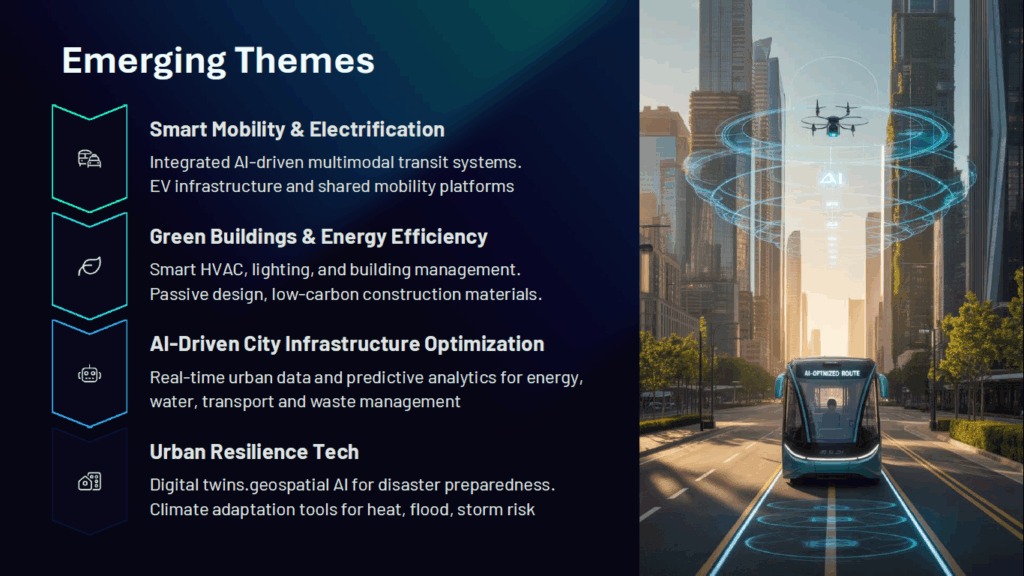
We see four high-impact themes emerging for AI and urban deep tech: smart mobility and electrification, green buildings and energy optimization, infrastructure intelligence, and climate resilience.
Startups stepping up to address these aren’t just software platforms. Many are grounded in hard science, material engineering, environmental chemistry, robotics, and edge AI. This is where deep tech excels. Science-based solutions tackling structural challenges.
A Portfolio Rooted in Urban Transformation

At Antares Ventures, this theme is more than theoretical. Urban resilience and infrastructure modernization is one of our core investment theses. We’ve already partnered with exceptional founders building category-defining solutions.
Ackcio, a Singapore-based startup, is revolutionizing structural monitoring for critical infrastructure using a wireless mesh-based sensor network. This removes the need for costly retrofits in aging assets in various industries, from infrastructure and railways to mining.
Hydroleap is transforming water treatment with electrochemical systems that reduce industrial wastewater pollutants without the need for harsh chemicals. From the agrifood industry to pharmaceuticals to data centers, Hydroleap’s innovation has made a significant leap forward in both sustainability and scalability.
Indian companies like The ePlane Company are designing how we move within and above the urban fabric. Their electric Vertical Take-Off and Landing (eVTOL) aircraft opens the door to low-emission, high-efficiency air mobility in gridlocked cities. They were recently awarded as a WEF-Technology Pioneer for 2025, and will provide hundreds of air ambulance services in India.
Startups like VFlowTech, building scalable long-duration energy storage in Singapore and other places with their Vanadium Redox Flow Batteries (VRFB) systems, provide the backbone for resilient city power grids as electrification accelerates.
These aren’t abstract ideas. They’re piloting across Asia with real results, measurable outcomes, and strong commercial traction.
Why We’re Investing in Deep Tech for Cities and Why Now
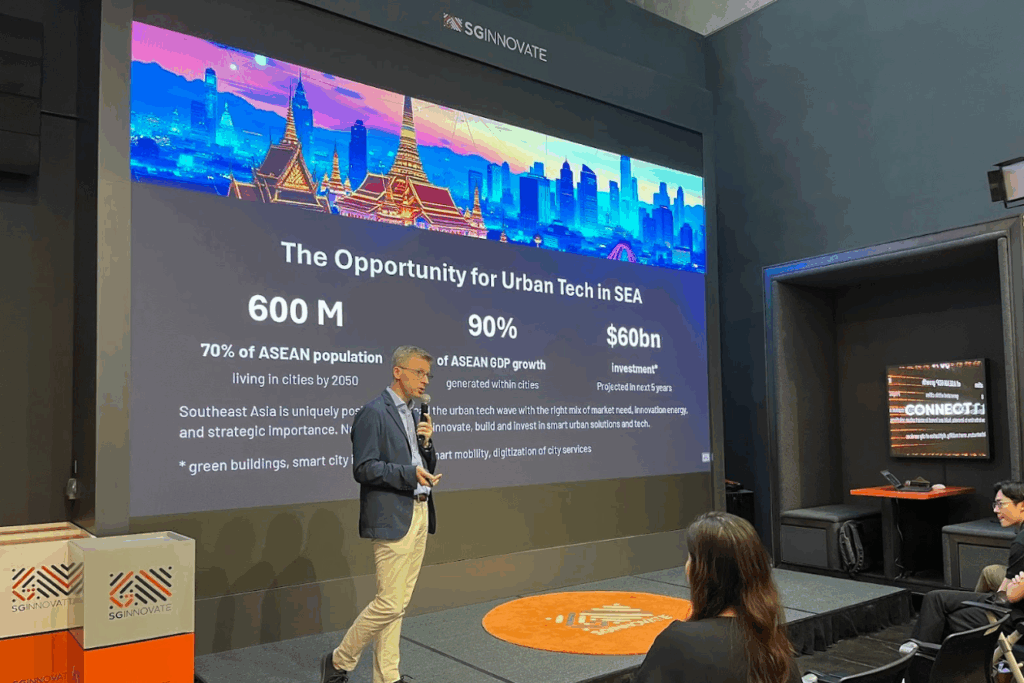
The opportunity is clear. With 600 million urban residents by 2050 and $60 billion projected in smart urban infrastructure and green building investments over the next five years, Southeast Asia is poised to become a global epicenter for urban innovation.
But promising science doesn’t scale just because it works in the lab. It scales when there’s alignment on localization, partnerships, and operational support.
Our strategy at Antares is to back science-driven ventures with early traction and clear regional fit. We work closely with founders to unlock pathways into Asia’s infrastructure ecosystem. That means helping navigate regulation, enabling first pilots, connecting with public and corporate partners, and offering insight into what’s really moving on the ground.
We’re not just funding. We’re building with them.
Epilogue: A Note from the Ground
Cities are where humanity converges. If we can reimagine how cities power, connect, move, and protect their populations, we don’t just solve local problems. We create new foundations for resilience, security, and competitiveness.
This perspective was first shared by Michael Gryseels, our Founder and Managing Partner, at the AI x Smart Urban Solutions Tech Pitch and Networking event in Singapore, co-hosted by Austrade and SGInnovate (May 2025)
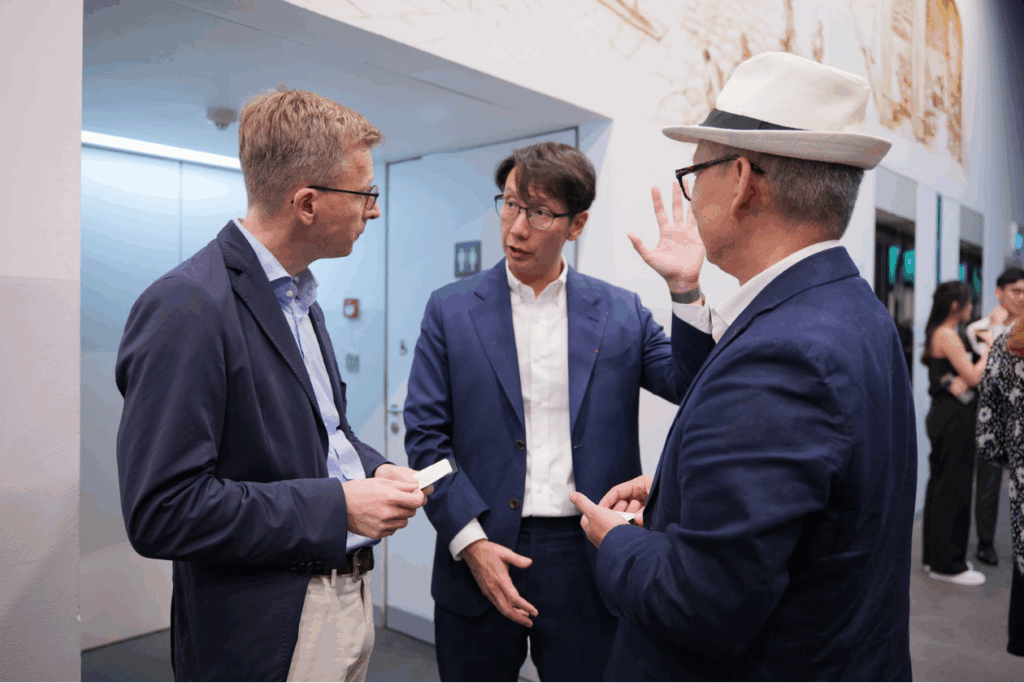
The session brought together Australian AI companies and Asia-based investors to explore how cities might scale resilience through technology. Michael spoke on a panel focused on infrastructure innovation, where the conversations were refreshingly grounded and more about near-term friction, deployment risk, and the gaps no one is funding yet.
📊 View Michael’s full presentation here →
Now is the moment to build. If these themes resonate with the challenges you’re building or investing for, we would welcome the conversation. Contact us here
Antares Ventures is pleased to share the QUEST Idea Competition, a JICA-led initiative that supports startups, research institutions, and mission-driven companies in addressing social challenges through co-creation and innovation.
Many startups and institutions face barriers to success, whether it’s a lack of local partners, execution funding, or commercialization roadmaps. QUEST tackles four common blockers:
🔹 Assets but no ideas
🔹 Ideas but no assets
🔹 No clear roadmap
🔹 No PoC funding
Through hands-on consulting, partner matching, and PoC support (up to ¥3M/project), QUEST helps bridge these gaps, bringing innovation closer to real-world impact.
At Antares Ventures, we believe regional innovation platforms like QUEST are critical to scaling deep-tech across Asia. With Japan’s strong innovation infrastructure and development experience, these collaborations offer a powerful model for bringing frontier technologies to underserved markets.
We’re proud to support the QUEST initiative and encourage deep-tech ventures in our network to explore this unique opportunity.
QUEST Idea Competition: Now Accepting Applications

Deadline: Monday, June 23, 11:59 PM (JST)
🔹 Application Guideline
🔹 Application Form
🔍 Program Overview (QUEST)
Target Participants: Companies / startups, educational institutions, government organizations, civil society groups, etc.
Support Provided:
🔹 Consulting support for:
🔹 Co-creation ideation and refinement
🔹 PoC planning and execution
🔹 Exit strategy and fundraising design
🔹 Financial support for PoC implementation (up to JPY 3 million per project)
If you have any questions or need further information, please feel free to contact:
QUEST Program Office
📧 Email: quest@tohmatsu.co.jp
🕘 Office Hours: Weekdays, 9:30 AM – 6:30 PM (JST)
Languages: Japanese / English
We’re proud to announce a major milestone for both See-Mode Technologies and Antares Ventures: the acquisition of See-Mode by DeepHealth, a subsidiary of RadNet, Inc. (NASDAQ: RDNT), the largest operator of outpatient diagnostic imaging centers in the U.S.
This marks the first exit for Antares Ventures and a powerful validation of our deep-tech investment thesis: backing visionary founders building transformative and impactful technologies in Asia.
Why This Matters for Healthcare and Medtech
See-Mode’s AI-augmented ultrasound reporting platform has been helping clinicians in Australia, Singapore, Canada, and the United States unlock deeper insights from medical images, improving diagnostic accuracy, reducing reporting time, and ultimately driving better patient outcomes. From its initial focus on stroke imaging to its FDA-cleared thyroid and Health Canada-approved breast ultrasound software, See-Mode has consistently turned deep research into practical clinical tools.

At Antares Ventures, our mission is to accelerate deep-tech startups solving real-world problems across Asia’s growth markets and beyond. See-Mode’s journey is a textbook example of this: a company rooted in cutting-edge research and built by founders who understand how to bridge innovation with execution. Healthcare innovation and medtech, in particular, represent some of the most critical frontiers for humanity; whether through precision medicine tailored for emerging markets or next-generation AI-powered clinical tools.
See-Mode, based in Singapore and Australia, exemplifies this intersection of advanced technology and meaningful healthcare outcomes, showing how Asia-based ventures can drive global change. Their acquisition by DeepHealth allows the platform to scale even further, supported by RadNet’s infrastructure and global reach.
Our journey with See-Mode began even before Antares Ventures was founded. In 2018, our Founder and Managing Partner Michael Gryseels made a personal investment in See-Mode and joined as a board observer. When Antares was launched, See-Mode became one of the first companies in our portfolio, and a powerful example of how early conviction and hands-on support can pay off.
Working with founders Dr. Sadaf Monajemi and Dr. Milad Mohammadzadeh has been a privilege. Their complementary expertise in biomedical engineering, AI, and product development, combined with exceptional grit, made them ideal deep-tech partners.
From Seed to Scale: The See-Mode Journey with Our Asia Acceleration Model

See-Mode started in 2017 as a pre-revenue, pre-product venture navigating complex regulatory and clinical environments. Through strategic execution and persistence, the team secured approvals across five countries, expanded its product suite, and scaled its impact internationally.
This journey also reflects the strength of Antares’ Asia acceleration model: hands-on, patient support designed to help technical founders grow through the region’s unique mix of talent, regulation, and opportunity. Deep-tech demands patient, hands-on support beyond capital, and our model is designed to provide that.
While not Michael’s first exit as an investor, See-Mode’s acquisition marks the first for our fund: A clear example of how our Asia acceleration model helps scale transformative deep-tech into real-world impact.
Antares Ventures’ Founder and Managing Partner, Michael Gryseels, reflects on the journey:
“Investing early in See-Mode was about believing in the founders’ vision and the power of deep tech to transform healthcare. It’s been inspiring to see how their grit and innovation navigated challenges and opportunities in Asia Growth Market to the global market, from product development to regulatory approval. This exit validates not just their work, but also the potential of our Asia acceleration model to scale deep-tech impact globally.”
What Next
With regulatory approvals across Australia, New Zealand, Singapore, the U.S., and Canada, See-Mode is well positioned to scale globally. Under RadNet’s DeepHealth, the technology will reach more clinicians and patients, delivering on its mission at greater scale.
We’re proud to have supported See-Mode’s journey from inception to exit, and we remain committed to backing the next wave of deep-tech founders shaping the future of healthcare and beyond.
We invite you to read the original transaction announcement here
Growth has always been Innovation-Driven, but That is Changing.
For decades, technological innovation and economic growth have gone hand in hand, largely in the same corners of the world. Countries like the US, Canada, Japan, and a few in Europe, the so-called developed world, consistently dominated both global patent filings and economic output. In 1975, the top five most developed countries accounted for 70% of global patents and also generated 70% of the world’s GDP growth. By 1995, this pattern was largely held, with top-tier economies still dominating both innovation and expansion.
This tight coupling between where technology originated and where value was created defined an era. It set the rules for how ecosystems were built, how capital flowed, and how new industries took shape.
But history doesn’t stand still. Neither does innovation.

Fast forward to 2023, and something interesting happened. Innovation, at least as measured by Intellectual Property (IP) and patents, became even more concentrated, with 85% of global patents coming from just a handful of countries. Yet those countries only accounted for 50% of global GDP growth. The other half? It’s being driven elsewhere, in places not traditionally seen as centers of innovation.
The Rise of Asia Growth Markets
Southeast Asia, South Asia, and the Middle East, what we at Antares Ventures call Asia Growth Markets, are emerging as powerful engines of global economic growth. These regions aren’t just expanding quickly; they’re doing so while facing infrastructure gaps, climate pressure, and legacy industrial challenges.
These markets are younger, faster-growing, and undergoing structural shifts that create fertile ground for deploying meaningful technology. The tools and solutions required to address their needs, from infrastructure and energy to food security and advanced manufacturing, often originate in labs thousands of miles away. But the opportunity to scale them, to turn ideas into impact, is increasingly found here.
This decoupling between where innovation is created and where growth is happening signals a huge opportunity. It means the world needs a new bridge: one that connects breakthrough technologies born in the global North with the rapidly transforming economies of the global South and East.
Antares Ventures was built to be that bridge.
Why These Markets’ Growth Story Needs Deep Tech Now
If growth alone told the story, Asia’s trajectory would be remarkable in itself. But growth here is happening under immense pressure: fragile grids power megacities, agriculture remains vulnerable and inefficient, urban centers are congested and polluted, and many of these regions rank among the most climate-vulnerable in the world.
This isn’t just an opportunity for innovation, it’s a necessity. Asia Growth Markets face a different kind of equation: how do you leapfrog into sustainable futures without following the same carbon-intensive paths of the past? The answer won’t come from incremental digital platforms or SaaS. It will come from deep-tech solutions designed for systemic transformation.
In many cases, Asia Growth Markets are leapfrogging legacy systems altogether. Instead of retrofitting outdated infrastructure, they’re embracing technologies like advanced power electronics, synthetic biology, and AI-native industrial platforms from the start. This makes them ideal testbeds for deep-tech deployment: fast, flexible, and high-stakes.
What the region seems to lack in IP generation makes up for in urgency, scale, and the willingness to partner. That’s where the opportunity lies, not in simply exporting ideas, but in adapting and scaling global innovation for a new kind of market.

That’s why Antares Ventures focuses on areas where frontier technologies can address these structural challenges. Whether it’s energy transition and decarbonization, sustainable agriculture and food systems, or resilient urban infrastructure, the region demands tech that’s as ambitious as its problems.
From Source to Scale
At Antares Ventures, we view our role as a conduit: sourcing breakthrough deep-tech solutions from across the world and helping them scale where they’re needed most. Our portfolio spans innovations in hydrogen logistics, water treatment, autonomous ocean robotics, and more, all of them addressing critical pain points in fast-growing regions.
We’re doing this by building deep, localized knowledge networks and working closely with Asian strategic LPs, governments, and ecosystem partners. Our proprietary Source–Invest–Scale–Exit strategy is designed to accelerate not just adoption but meaningful impact.
The model is already working. Canadian-based Open Ocean Robotics, a pioneer in autonomous maritime monitoring, is now operating in Singapore. Ayrton Energy, a hydrogen logistics company using novel LOHC tech, won Temasek’s Livability Challenge. Hydroleap, based in Singapore, delivered a wastewater treatment project in Malaysia, cutting chemical use by 90%.
Each of these companies was born in one part of the world, but scaled and succeeded in Asia Growth Markets. This is the pattern we believe in, and the pattern we intend to keep repeating.
A New Kind of Venture Fund for a New Era
Antares Ventures is purpose-built for this moment: a deep-tech fund with global reach and regional execution power. We’re not just investing in solutions, we’re investing in the transformation of industries that will define Asia’s next 50 years.
Our team brings unmatched operational expertise in energy transition, industrial decarbonization, agriculture & food innovation, smart cities & transportation, semiconductors, and advanced computing. We provide startups with strategic capital and specialized industry expertise to scale rapidly and sustainably in Asia Growth Markets. Our deep local ecosystem knowledge uniquely positions us as the ideal partner for ambitious founders ready to transform critical industries in Asia.
The stakes are high. The problems are real, and the potential for positive, lasting impact is unlike anywhere else in the world.

That’s why we were excited to take the Impact Stage at Penang Slush’D 2025 to share how and why we do what we do and why we believe deep-tech must go global to be truly impactful.
At the center of the growing region for semiconductor tech, our message to the global innovation community is simple: the hardest problems need the hardest tech, and the best place to deploy it is Asia. Like the event’s theme, Antares is building a bridge between worlds: sourcing the most promising deep-tech innovations globally, and scaling them in the dynamic, rapidly growing markets of Asia.
You can check out Louis Murayama’s full presentation below.
Whether you’re a founder with a breakthrough in deep-tech, an LP seeking regional exposure, or a government-backed innovation agency. Let’s connect here.
Antares Ventures is proud to support the latest milestone in our portfolio company VFlowTech, as the company announces a USD $20.5 million fundraise to advance its long-duration energy storage systems and AI-enabled energy intelligence platform.
The round was led by Granite Asia, with participation from EDBI, MOL PLUS, PSA Ventures, and returning investors including Antares Ventures, İnci Holding, UntroD Capital, Pappas Capital, Wavemaker Partners, SEEDS Capital, and Entrepreneurs First.
Founded in 2018, VFlowTech is a Singapore-based deep-tech company developing vanadium redox flow battery (VRFB) systems, long-duration storage solutions essential to grid resilience and renewable integration.
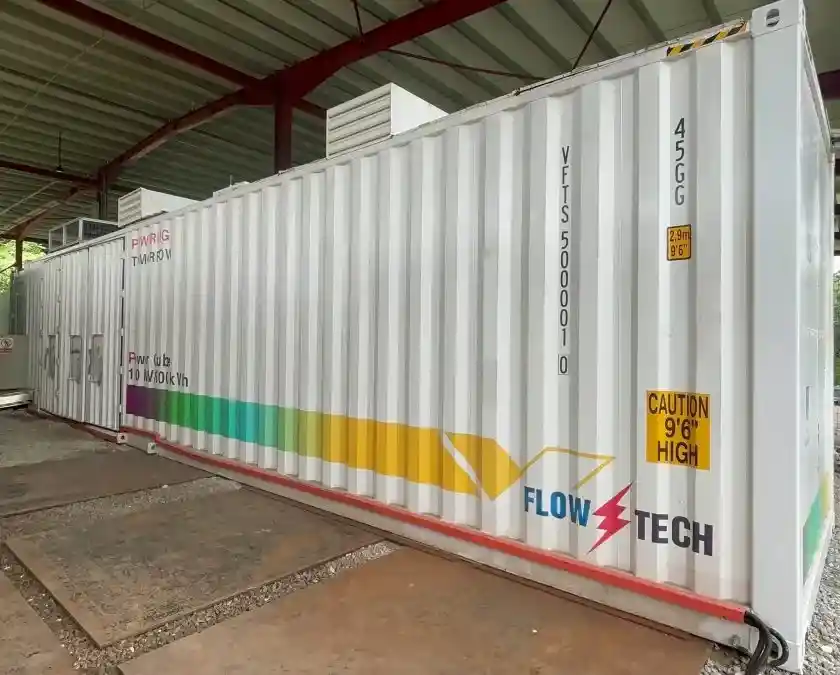
This new round will enable the company to:
1. Scale manufacturing and global deployment of its proprietary VRFB systems
2. Advance its AI-powered energy management platform to optimise efficiency and monetisation
3. Build out strategic supply chains, including vanadium recycling, membrane innovation, and electrolyte development
“As industries and governments prioritise sustainability, VFlowTech is at the forefront of providing advanced storage solutions that optimise energy usage and reduce environmental impact,” said Dr Avishek Kumar, Founder and CEO. “With this investment, we are poised for significant growth and technological advancement.”
“This funding gives us the ability to take on larger projects, expand into new markets, and integrate cutting-edge digital intelligence into our energy storage solutions—making them not just storage systems, but revenue-generating assets,” added Dr Arjun Bhattarai, Co-Founder of VFlowTech.
Driving Asia’s Energy Future: The Critical Role of Long-Duration Energy Storage in the Region’s Energy Security
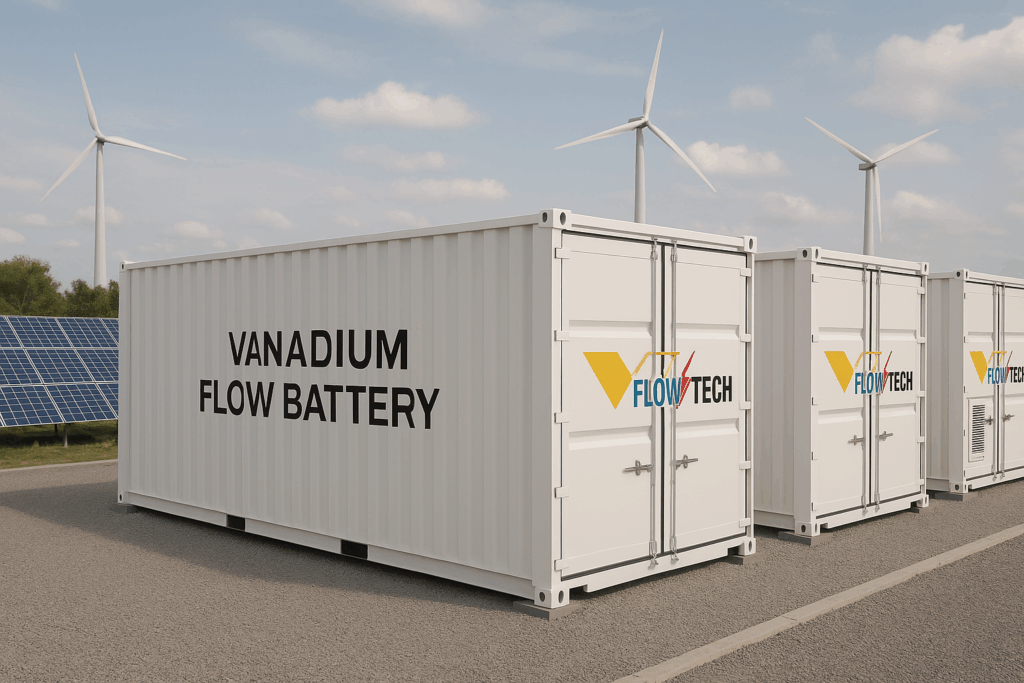
At Antares Ventures, we’ve backed VFlowTech since its earliest stages, recognising the potential of its technology to meet Asia’s growing need for energy resilience, affordable renewables, and smart infrastructure.
“Antares Ventures has proudly supported VFlowTech from its inception, recognising early the transformative potential of its battery technology,” said Michael Gryseels, Founder and Managing Partner at Antares Ventures. “Over six years, the company has grown from a university research project into a leading innovator in long-duration energy storage, driven by exceptional scientific talent and strong commercial execution. VFlowTech’s solutions uniquely address Asia’s urgent need for affordable, clean energy and improved grid stability, directly enhancing energy security in the region. We look forward to continuing our support alongside visionary investors and strategic partners committed to securing Asia’s energy future.”
As Asia’s energy transition accelerates, investments like this reflect our belief that the region represents a converging point for deep-tech innovation and sustainability megatrends. We’re proud to work alongside VFlowTech as they continue building solutions for one of the most pressing infrastructure challenges of our time.
For more details about VFlowTech and their proprietary VRFB system, check their website here
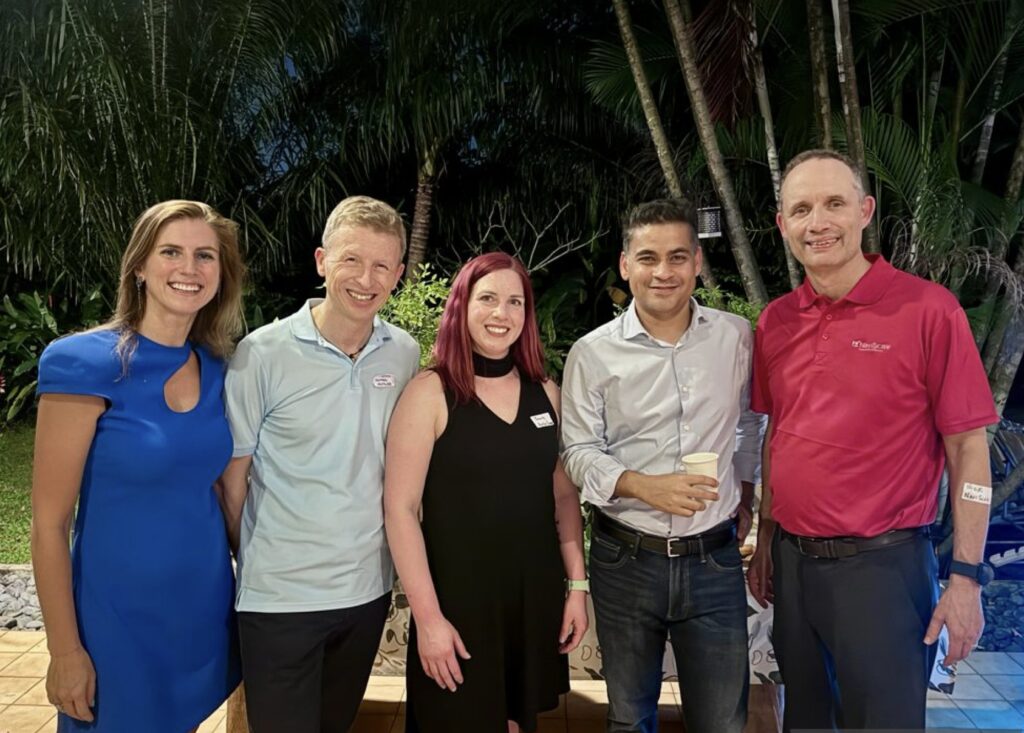
During Ecosperity Week and the Cleantech Forum in Singapore, Antares Ventures convened over 30 corporate venture investors and industrial leaders for an evening of connection, collaboration, and shared purpose.
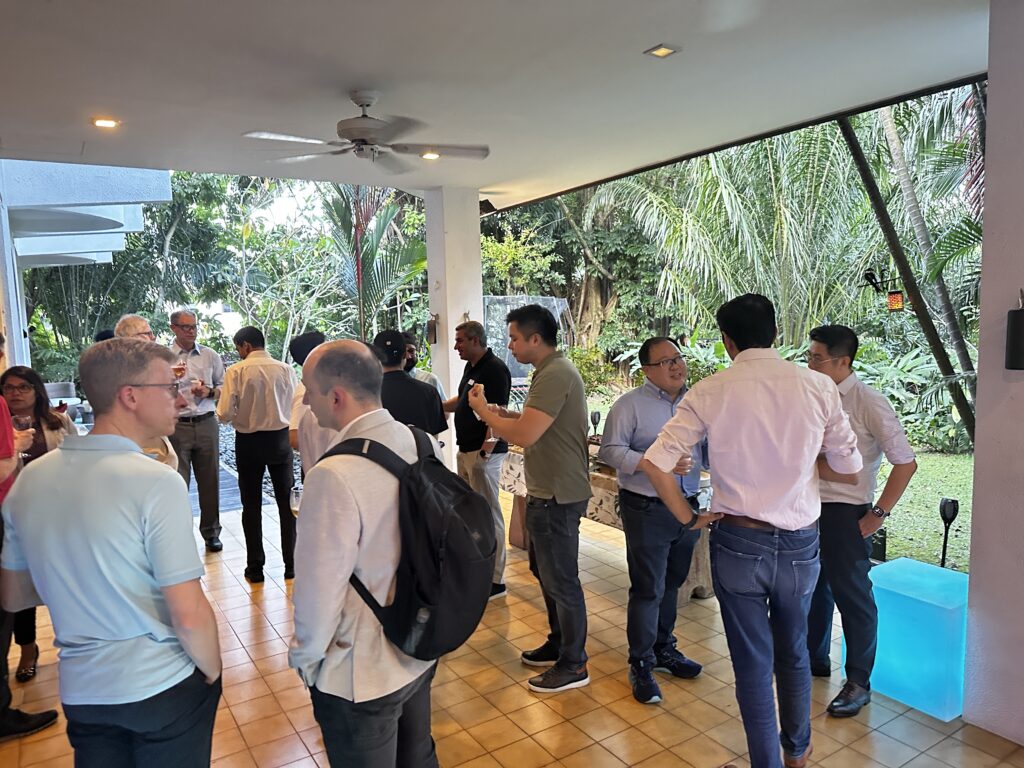
Held under the theme “Catalysing Industry Innovation,” the event brought together guests from Singapore, Thailand, US, UK, France, and Canada, each representing the global reach and regional ambition required to scale transformative technologies in Asia’s Growth Markets.
The gathering reflected the core of Antares Ventures’ mission: to accelerate the commercialization of frontier deep-tech solutions that solve real-world industrial challenges, such as energy transition & decarbonization, resilient cities & infrastructure, and next-generation manufacturing.
A Global Deep-Tech Portfolio with Regional Impact

At the heart of the evening were four Antares portfolio companies, each demonstrating how scientific breakthroughs can translate into scalable market solutions:
1. Ayrton Energy (Canada): Revolutionizing hydrogen logistics through next-generation LOHC (liquid organic hydrogen carrier) technology—making hydrogen as easy to store and transport as diesel.
2. VFlowTech (Singapore): Advancing grid resilience through long-duration energy storage, using cutting-edge redox flow battery systems designed for industrial use and utility-scale deployment.
3. Hydroleap (Singapore): Pioneering electrochemical water treatment technologies that dramatically reduce industrial water usage, sludge production, and operational costs.
4. Ackcio (Singapore): Enabling real-time, automated monitoring for critical infrastructure—from construction to mining—with robust wireless mesh networks that operate in even the harshest environments.
A standout moment of the evening was celebrating Ayrton’s recent win at Temasek’s The Liveability Challenge, where they secured a $1M grant and attracted investment interest from multiple VCs
Each company represents a different pillar of deep-tech innovation, but all share a common goal: scaling impact in complex markets.
Building Ecosystem Momentum in Asia

Asia’s industrial markets are undergoing rapid transformation, and deep-tech innovations have a crucial role to play. As governments push ambitious energy and sustainability mandates, corporations face mounting pressure to decarbonize, digitize, and future-proof operations. For deep-tech startups, this creates both a challenge and a historic opportunity.
At Antares Ventures, we view Asia as a pivotal region for the future of deep tech, where structural megatrends and sustainability imperatives converge. Home to the world’s largest industrial base, fastest-growing economies, and an escalating demand for clean energy and sustainable infrastructure solutions, Asia presents a complex but compelling landscape. However, bringing cutting-edge technologies to these diverse markets requires more than just capital; It requires deep understanding, market access, and strong partnerships. That’s where we come in.
Our event was a reminder of the power of collaboration, where industry leaders, investors, and founders can come together to discuss real-world solutions and accelerate adoption. These gatherings provide an invaluable opportunity to share insights, foster partnerships, and advance technologies that will help shape the future of Asia’s industries.