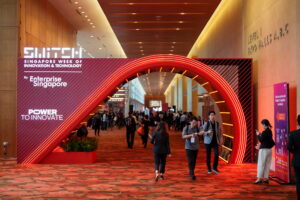
DealStreetAsia’s 11th Asia PE-VC Summit took place in Singapore on 23-24 September 2026. The summit brought together more than 1,300 private market professionals, including over 300 LPs, institutional investors, family offices and sovereign wealth funds.
One point was clear from the first day: capital is becoming more deliberate about where it goes, how it gets deployed, and what ultimately drives returns.
For Antares, that question is closely tied to the physical investment cycle already underway across Asia. Capital is moving into energy, compute, and industrial infrastructure. The opportunity for deep tech lies in solving the constraints that determine how effectively those assets can operate and scale.
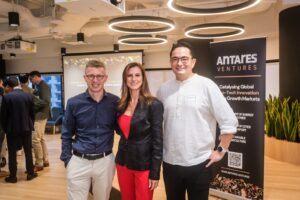
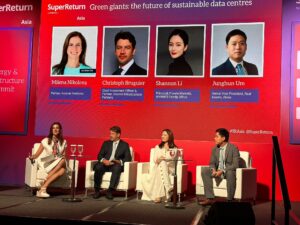
Across the two days, our Partner Milena Nikolova joined three panels spanning private markets, energy, and deep tech.
On Day 1, Milena joined an invitation-only breakfast session hosted by Vistra Fund Solutions, “When Global Capital Fractures: Opportunity and Friction in APAC Private Markets,” alongside David Anderson of Vistra Fund Solutions, Surbhi Khandelwal of Triple P Capital, and Davian Sim of August Global Partners. Moderated by Andi Haswidi of DealStreetAsia, the session looked at how changing capital flows are reshaping opportunity across the region.
The broader takeaway from Day 1 was that opportunity remains, but the bar for underwriting it is higher. For deep tech, that means looking beyond technical novelty to how a technology performs inside the system it is meant to improve.
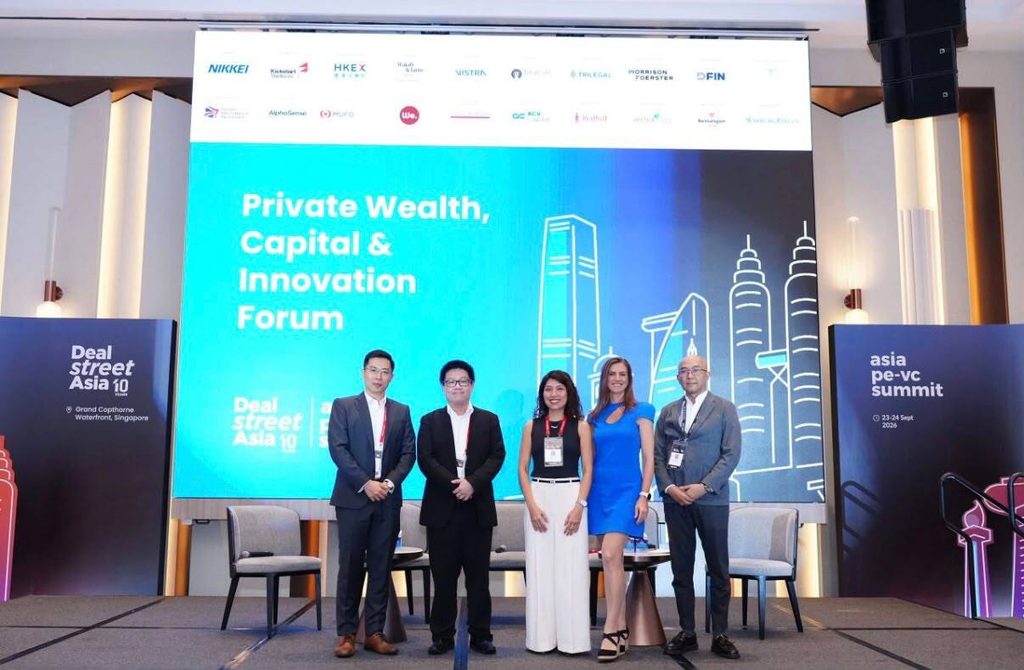
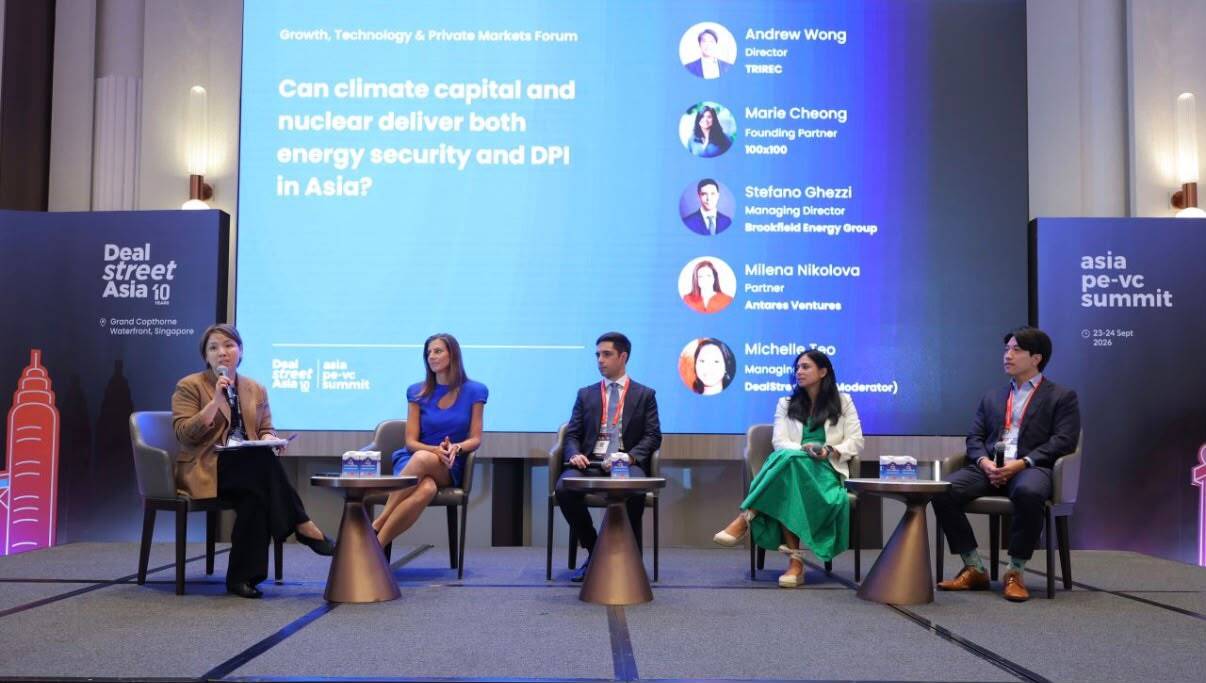
On Day 2, the conversation continued into climate capital and deep tech, as Milena was invited to speak for two panels. Milena joined Andrew Wong of TRIREC, Marie Cheong of 100×100, and Stefano Ghezzi of Brookfield Energy Group for “Can Climate Capital and Nuclear Deliver Both Energy Security and DPI in Asia?,” moderated by Michelle Teo, Managing Editor at DealStreetAsia.
The summit closed for Antares with a discussion on what it takes to build, finance, and scale deep-tech companies across Asia. Milena joined Jeep Kline of Raisewell Ventures, Raymond WP Woo of Kyoto University and Kyoto iCAP, and Richard Yang of Sinovation Ventures, in a session moderated by Andi Haswidi, Head of Data & Research at DealStreetAsia.
Jeep argued that attracting foreign investment into deep tech has to mean more than capital alone. “When you attract only money, the money comes to take the resource and there is nothing else behind it,” he said, pointing to IP, commercialisation opportunities, and new manufacturing as what needs to come with it.
Raymond described Southeast Asia as a market of 700 million people that remains highly fragmented, and today functions more as an application market for deep tech. The path up the value chain, he noted, lies in making existing strengths such as hardware manufacturing more efficient and leveraging AI to produce higher value.
Richard pointed to Southeast Asia’s position as a place where East and West meet on technology, with companies using Singapore as a regional base to serve global customers. “It goes both ways,” he said, “and of course, it’s not just about the US and China; it’s about the whole world.”
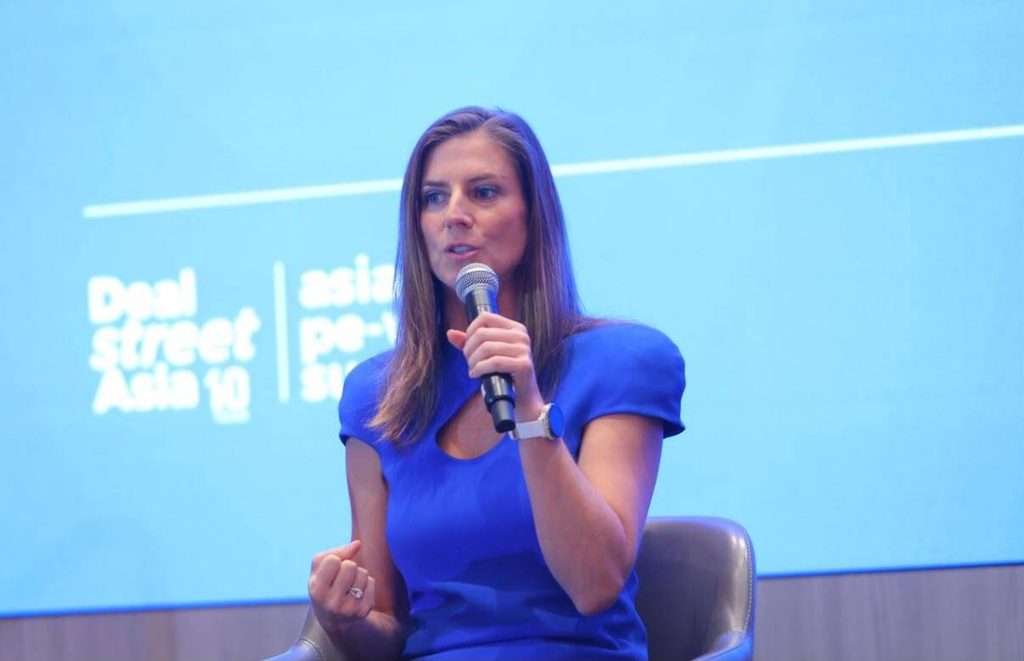
Milena closed with a view on what AI could mean for science itself. “We have only scratched the surface of what AI can do for scientific discovery,” she said. Lab work that once relied on repeated manual trial and error could see its timeframes collapse, opening the way to reimagine how industry works.
Deep-tech investing requires the ability to underwrite breakthrough technologies by assessing the underlying science, technical feasibility, commercial potential, and path to market. At Antares, this capability is central to how we identify and support innovations that can move from research environments into scalable businesses and real-world applications.
As capital moves into energy, compute, and industrial infrastructure across Asia, the question is not only whether a technology is novel, but whether it can perform inside the system it is meant to improve. The opportunity remains. The bar for underwriting it is higher.
***
If you are building or investing in deep tech across Asia, we welcome the conversation. CONTACT US.