“The biggest sustainability challenges are in Asia, and so are the biggest market opportunities.”
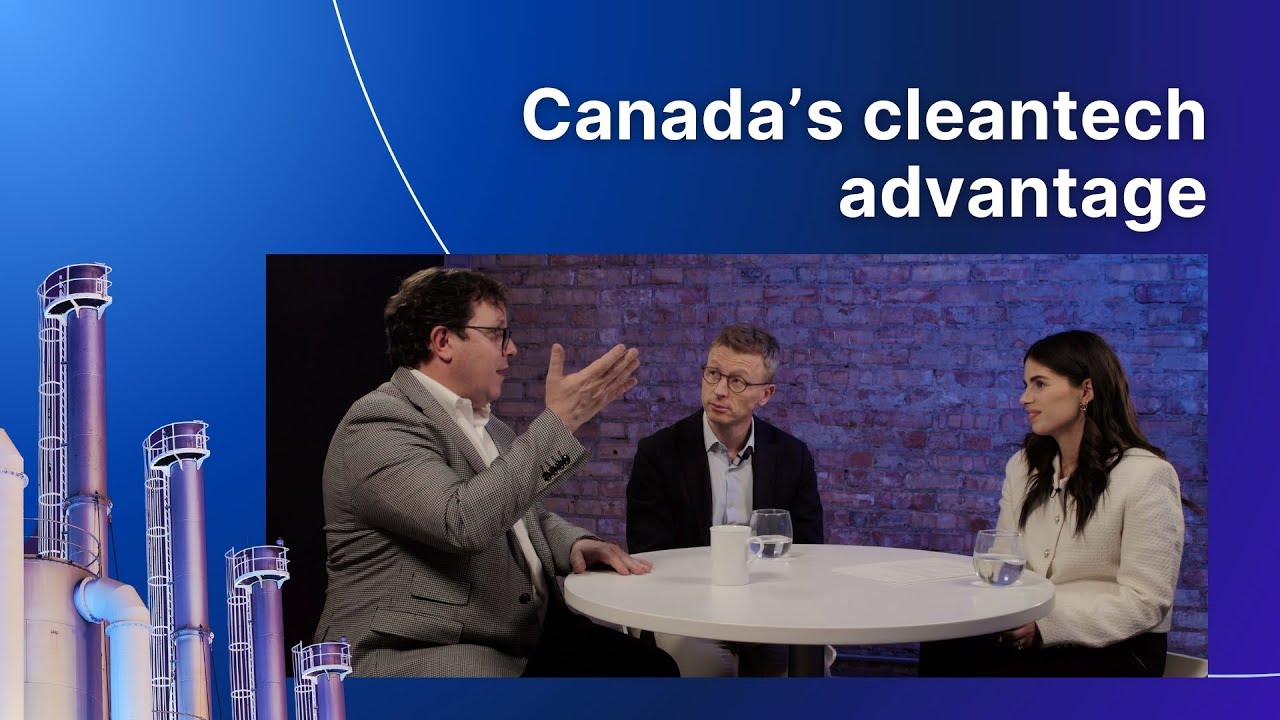
In a recent MaRS Discovery District interview, Our Founder and Managing Partner, Michael Gryseels, discussed Canada’s Cleantech Advantage and shared a key insight: Asia holds both the biggest sustainability challenges and the strongest market opportunities. Michael has been investing in deep-tech Canadian startups since 2019.
With 65% of the Southeast Asia region still powered by coal and 50% of the world’s geothermal reserves, the demand for proven clean energy solutions is accelerating. At the same time, companies that have solved similar problems elsewhere are looking to expand into Asia’s Growth Markets—where scale and impact go hand in hand.
At Antares Ventures, we’ve backed Canadian deep-tech companies (including Open Ocean Robotics and Ayrton Energy) along with other global companies in their expansion journey and we plan to support more. Our value creation focuses on helping them navigate market entry, scale operations, and establish long-term partnerships in Asia’s Growth Markets.
Asia’s industrial base, strong policy momentum, and accelerating demand for sustainable solutions make it a critical ground for cleantech innovation. As Michael highlighted in the interview, companies that have solved similar challenges elsewhere now have an opportunity to scale in Asia’s Growth Markets, where real market needs meet transformative impact at scale.
What do you think about this global shift in cleantech expansion?
You can hear the full episode below on Youtube. For more on how conviction shapes early decisions, follow our insights on LinkedIn.
Prefer to read it in full? Below is the lightly edited transcript for deeper reading.
Leah (Interviewer): [Music] When it comes to clean tech, Canada continues to punch above its weight. So, to explore what’s behind this Canadian clean tech advantage, I’m joined by Michael Gryseels, Founder and Managing Partner at Antares Ventures, which is an early-stage VC firm out of Singapore that supports deep tech startups tackling sustainability challenges in Asia’s growth markets. So welcome!
And also, joined by Jason Blumberg, Co-Founder and Managing Director at Earth Foundry, which is a U.S. Venture Capital fund that invests in groundbreaking climate tech companies. So, welcome both!
Jason Blumberg (Earth Foundry): So, welcome both!
Michael Gryseels (Antares Ventures): So welcome!
Jason Blumberg (Earth Foundry): Thanks for having us.
Leah (Interviewer): Uh, so Michael, I’ll start with you. You founded Antares Ventures in Singapore to help companies around the world break into the Southeast Asia market. However, or, in good reason, a significant portion of your investment has consisted of Canadian companies. So, what is it about Canadian entrepreneurs that’s been exciting for you?
Michael Gryseels (Antares Ventures): It was, I think, never a deliberate strategy to invest disproportionately in Canada, but I think it’s where we found a combination of a couple of things. Number one, I think, is the founders, which, um, on average, we think are just of higher quality, higher determination, higher grit. And we found also, you know, both founders and co-investors that have a global mindset and, you know, have that global mindset early on in the venture, and that’s very important for us because our objective is to get them over to Asia.
Leah (Interviewer): And uh, I’m curious, just following up on that, Canadian cleantech companies are born exporters, we’re a pretty small country, uh, so we do, a lot of the times, the first contract is even outside of Canada. But what is Southeast Asia’s kind of cleantech need or competitive advantage, and, and why do you encourage ventures to go there?
Michael Gryseels (Antares Ventures): I, I think a couple of things. So, for example, 65% of the region is still powered by coal. Um, it is, unfortunately, doesn’t have wind energy. Even solar, people think it’s, you know, it’s tropical, so solar should be good, but it’s cloudy all the time because it’s very, I mean, it’s raining a lot. And so, we need our own solutions. And so therefore, we look at kind of which other countries have things that are similar or that, you know, technologies that we can transfer. For example, Canada has been a pioneer in geothermal energy. I mean, you’ve got E and other companies here. Southeast Asia has 50% of the world’s geothermal reserves. You have, because of again, combination of traditional industries and government support, you have a lot of oceantech. Southeast Asia has 200,000 kilometers of coastline. And so, we found that that, you know, that care for the environment in combination with tech is something that Canada has peered a lot. We found a lot of ocean tech companies here, even though the regions are very different, Canada has solved a similar problem, and, and so it’s, you know, and we have a market need. So, it’s a good, it’s a good export.
Leah (Interviewer): Jason, you’ve also made some investment in Canadian companies in your firm. We’ve gone through kind of how you do your due diligence. I mean, you’ve seen hundreds of pitch decks every single month, thousands of pitch decks every single month. So, what made Canadian ventures like your investment companies E Inc, next slight stand out?
Jason Blumberg (Earth Foundry): So, we’ll look at 2,000 innovations a year with a goal of trying to invest in a half dozen or so. And so, it’s a pretty big funnel down to find the right innovations. What we find about Canada, as mentioned, is this supportive ecosystem where you have the innovation, you have an interest in commercialization, then the tools are there to help think about what are those commercialization paths. So, when the innovation is getting close to being ready, it has a shot of moving forward. A lot of innovation never has a pathway to get there or it sits in a lab and no one’s thinking about that. And so, whether it’s programs you folks run like women in clean tech where you send folks into the, into the labs, or whether it is the, the universities thinking about how do I actually turn this into something, that doesn’t happen in a lot of institutions or cities or countries. And so, that pathway allows for things to be much closer to someone like us to be ready. It’s still a hard funnel because there’s a lot of things that are trying and, and, you know, a third of a percent of things to invest in is a pretty small number. But on a percentage basis, a much higher hit rating in Canada than other places.
Leah (Interviewer): We talk a lot about the lack of private, particularly early stage funding in Canada. And so, that means a lot of entrepreneurs need to find a way to scale bootstrapping or not much seed capital. In your experience as talking to companies, what impact does that have on the ventures as they scale, maybe Michael? I know you have some insights here.
Michael Gryseels (Antares Ventures): I, I think, I mean, it’s, uh, I actually think it leads to ultimately stronger ventures. And why is that? Let me just give you some examples. I’ve seen founders here on one hand being far more committed to the ventures. Several of the companies, uh, like we were amongst the first investors in Summit Nanotech, uh, the founder Amanda mortgaged her house to start up that company. Um, you know, the funders are far more resourceful because they, they can’t get as much of that pre-seed funding from the local ecosystem, so they try to stretch every dollar more by on one hand, you know, being lean in, in how they operate and also leveraging to the fullest extent government support that exists in various forms. And I think thirdly, I think it is actually driving them to commercialize earlier, um, because the larger funds would only come in once the revenue is, you know, the the ventures start to generate revenue. So, I find in general that there is a commercial focus. So, I think overall, I think it makes them more resilient, more productive from a capital perspective, and more commercially focused, more internationally focused than, than perhaps the same ventures on, on, on the southern side of your border. Let you comment on that, but I think it’s, it’s some optimism to bring to a challenge that that we see quite often.
Jason Blumberg (Earth Foundry): Sure. Yeah, I think that, uh, some of the government programming that supports from non-dilutive helps get them farther along. I do think that there is a big gap overall, and so it may make them more resilient or productive and it, it does help from a venture perspective that the valuations aren’t as high. So, as you go through the steps, you can have a higher chance of success because if you start at a high valuation and you don’t achieve things, you go, you end up going bankrupt, and if you low, you have a much better potential for moving forward, so that’s positive. On the negative side, what we see is there’s not much institutional support to support early stage venture funds. There is later stage, people are starting to get into that area, and that’s not just in Canada. It is more in Canada, but in the U.S. a lot as well. In this space, people have lost a lot of money over time. The investors are usually new, and so they back get some money together, they lose the money, and then people don’t want to do it again. So, I think being thoughtful about our space more generally and how do you convert these into opportunities is key, and then backing these early stage companies, uh, needs to happen to really get them going, and that starts with the decision makers and Pension funds more generally allocating some money and saying, I’m going to do this because there’s a lot of reasons for it, and that’s, that can be hard for the person making the decision because it’s the end of the day, they are an individual decision maker whose job is on the line as how is your returns in performance, and if it’s not good, then their jobs are not going to be available to them. So that’s, it’s, it is a hard situation.
Leah (Interviewer): So, on that then, spinning kind of our, our lack of early stage private capital is potentially, you know, building more resilient companies, ones that are financially responsible. You can may say any other advice on how Canada’s ecosystem could Foster more world-leading, uh, climate companies?
Jason Blumberg (Earth Foundry): Yeah, that’s a great answer. I think as we interact with all the ecosystems in North America and globally, we get a lot of questions of what are the ecosystems that we should Benchmark against and try and look at to to see. And, uh, Canada, Mars, Toronto, a great ecosystem. So, we often point to a thoughtful approach that Canada’s taken to Think Through each part of the value chain and how do you plug again to to each of those where there’s significant support, uh, is from the research University all the way through late stage companies, there’s support. So, Mars plugging in there at the early stage and figuring out a lot of that is great. When we get to, uh, and and we discuss this, the followon funding, that followon funding can be more challenged, but that’s because the amount of capital it takes to do that and the risk capital and the type of person that it takes to do that is limited because you need experience in in that area. And so, making sure that there’s the support mechanisms post whatever you guys do is key to helping, uh, build out the ecosystem there. Traditionally, has been support in non-dilutive capital, which has been very helpful to attract investors and also get the companies to the next stage, continuing on that is an important part of delivering on a successful outcome. And then having institutions that will support folks like us to invest in those type of companies is key as part of that as well, and I think the ecosystem could benefit from having more of that, uh, that type of capital come to the market.
Michael Gryseels (Antares Ventures): Yeah, I’m going to comment from my vantage point, which is that, um, I think Canada is a hot spot for innovation, particularly in clean tech. It’s a small market, and so I think your founders need to think global on day one. I think that’s the good thing. I think the question is like what support do they have? I, you know, it seems to me that still a lot of the investors here are local sort of kind of, you know, how do, how do you attract more global players to come to Canada and kind of ecosystems that should be an example for Canada is like Israel or, you know, even Singapore. Like, basically they don’t have a big global market, but they want to be Global beacons of innovations and they spend a lot of effort for getting Global Capital to come into that market. I mean, that’s up to the entrepreneurs to be looking. We’ve invested in Summit Nanotech. We, you know, we’re in there with Tamas and with Capricorn from us in a, and energy, we’re again there. It’s a global mix, so we’re two Asian investors, uh, one U.S. investor, and MBDC, but I would say they’re probably still the exceptions of Canadian founders that have that kind of global cap table. But I think, yeah, the orchestration of how do you get Global Capital to come to Canada? How do you get your founders and your ecosystem to, to take a global, you perhaps even more in this world because there are opportunities Beyond North America of their companies. So, that would be my advice.
Leah (Interviewer): Suggestions then to founders, if they do have that Global mindset, which I will say, I mean, if you want to do anything in Canada, you have to have a global mindset, how do they impress you guys as international investors? What would you be looking for to be to be impressed by, by one of our founders?
Jason Blumberg (Earth Foundry): So, Venture typically follows a hype cycle on a segment and so wherever there’s a segment, especially if the segment is not that technology heavy, it’s more business model heavy, they’ll follow the hype cycle and go there. And so, Capital just moves to those areas. AI, before that climate fit in for a little bit after Big Data as apps were trending down some as software’s trending down some. So there was a movement there with the IRA and with some of the actions that were happening around the environment that drove that, that’s kind of no different than when we had era in 2009. So when President Obama did the stimulus, there was a similar type of environment where you had a lot of capital going and a lot of value destruction. What I don’t see as much as a lot of bad decisions that were made that will cause a lot of value destruction. So, it won’t be as rental to the industry, the hype cycle that that happened, but it will be harder to get Capital, there’ll be less crossover investors, it just means you need to be more Capital efficient to make smarter decisions as you look at how you build your companies because there’s there’s always two ways to build a company and we we went back to this with Canada that you can build a company, uh, efficiently managing your Capital stack or you can put as much money as possible into to see how quick you can go and that model hasn’t really worked well, uh, and commodity spaces it hasn’t worked well. Solar before hydrogen, now we have some of that wash out that will happen and so, you know, if you invested in hydrogen, you’re probably not going to be happy, there’ll be a few wins, maybe yours will be, um, but, but, uh, but in general, you’ll have some wash out in certain sectors. So that will cause a little more retrenchment, but overall, we’ve got a much better set of assets, we’ve got a much better set of entrepreneurs, better set of invest ERS than we had during the last crash. And so, it will endure going forward. We also have a lot of crossover or a lot of corporate investors that have come in. Those corporate investors don’t appear to be going away. It’s always was a question of would they disappear, but they lack Innovation as companies generally and so open- Source Outsource Innovation helps fill some of the gaps on that. None of those companies are are struggling in general as as a pool. So because of that, they’ll continue the open Innovation it’s worked for a long time now and so we’ll continue to see that. So corporations coming in fill the void, but overall, there will be kind of less excited Capital that comes in when you have the hype cycle that happens.
Leah (Interviewer): So, you’ both invested in a few Canadian companies, but any advice on how Canada’s ecosystem, how we can Foster more world leading climate Ventures that will grab both of your attention?
Michael Gryseels (Antares Ventures): I’ll say two things. So, first I think on AI, I think AI is critical also for hardware companies. We have in our portfolio, I’ll just give you three examples. We have a company that has a a battery management system that is totally using AI to optimize the lifespan, the range performance of of of a battery in the context of a vehicle. It’s combination of hardware and software. We’ve got an autonomous, I mean open oce robotics uses AI for autonomous navigations of its vat. We just invested in an electric plane company that uses AI to land. I think that actually AI is going to be critical even in, you know, hardware, uh, Investments as the first reaction I want to have. The second is on the question is whether Capital has disappeared. I think there’s two things. I think there’s been the general micro which I think has just kind of led to more risk aversity and obviously what people are concerned with Hardware is the I muge amount of capital that it will require in manufacturing in projects, Etc. And so, you know, just a higher cost of capital with interest rates that have gone up and and and the switch from from risk on to risk off, I think has just not helped. You know, I I don’t have a crystal Bo, I don’t know, you know, many people have opinions what is going to happen to Industries, but, uh, hopefully over time you’ll see more risk tolerance and risk cap. And obviously, you could even say that some of the I companies have kind of defeated that because they also need a lot of capital and they manage to get it. And I think the second thing is that there’s right now, I think particularly with the US elections, there’s uncertainty around how, you know, what’s going to happen policy-wise to climate transition. I hope that uncertainty goes away quickly and then things will, you know, because just the last thing investors just hating uncertainty and so I feel like a lot of funds are just standing on the, you know, waiting to invest because they don’t know how things will play out.
Jason Blumberg (Earth Foundry): So exit activity comes from two ways. It comes from exits to corporations or it comes from exits to IPOs. And so the corporation and IPO Windows have been kind of closed in the US because of Overlook overlooking on a lot of these companies. There may open up some, uh, in the near future and that could be beneficial. I think the second thing is it’s company dependent. So if you’ve over capitalized an asset to its value, your exit potential decreases or you take a much lower return. And so folks will continue to fund assets that haven’t met the valuation that they want hoping they’ll grow into it. It’s like buying clothes that are too big and hoping you’ll grow into it. It’s probably not the right choice, but what a lot of people have done. And so if you’ve built a company that has steps of valuation that have exit points all the way along, then you have a lot more options. And so those exits are much more likely to happen circling back the Canadian companies being valued reasonably being efficient much more likelihood of exit options, uh, on the horizon for those type of businesses.
Leah (Interviewer): Over the past year, we’ve seen a lot of talk about AI, spoken with a lot of investors that are interested in climate, but it’s much more Capital light AI all over the place type of of climate Solutions. So after the 2021 to 2022 climate Tech investment boom that we saw so many more players in this space, I mean, I’ve been in the space since 2014, not many investors at that time, so it’s awesome to see how many are here. But do you think now climate hard tech innovations are being overlooked? I know not from either of you since that your that’s your thesis, but have you seen more investors getting this space larger syndicates that you can put together, um, or how has that moved within the recent years?
Michael Gryseels (Antares Ventures): Yeah, so I agree with a lot what Jason said LPs are primarily corporates. Um, we are working I mean and Beyond rlps we’re working with more, I think the climate, there’s a lot of corporat that have understood whether they were in energy or not that sustainability as a business and that want to kind of, you know, diversify or add that as, you know, as something into their portfolio and we as a fund actually one of the things we try to do is is to try to get corporates in as soon as possible. Sometimes it is, you know, to just kind of get that initial proof concept, but more importantly is to have sources of capital and strategic partners that are less, you know, depending on the cycle and overtime could even be, uh, um, you know, exit opportunities and and to your question on timing, we try to get these corporates in early. Then obviously there’s a way to do it that none of those Corps become too dominant in the direction of the company, uh, so for us it’s by us as a funding there and and keeping them as an LP and then facilitating commercial collaboration or if they come in it’s, you know, we try to work with corporates that have a professional Venture arm and understand, you know, what they what a startup needs to to drive and and and just making sure that we’ve got that balance between an independent, uh, direction for the startup that maximize the value for everyone and and and the Strategic support for the corporate, whether that’s to Capital, to commercial synergies, or to, you know, taking off for example. And I I firmly believe that in this new environment Founders and startups need to think about how they build a more asset light, um, so you know, you can be a hardware company without needing a manufacturing plant, you don’t need to go into project development yourself. So I think, you know, when when all the capital was there, you know, I think companies, you know, back to, you know, they the clothes are too big like they they try too much and I I I think at the end the if you look very clinically at most of these startups, their core differentiating and you know, value at is in on the R&D front, they’re frankly not good in manufacturing, they’re frankly not good in project development and so I think to find out it takes time and I think it’s something that needs to be done early, you need to think through about what’s the corporate structure, how do you leverage of balance sheet capital from Partners or from, you know, third party financiers to scale the company I think and again that leads to ultimately one more Capital productivity two valuations that are more reasonable and three it gives you optionality with respect to exit.
Leah (Interviewer): So I think the the last thing that we’re we’re also and when I say we’re Collective climate Global Investors and ecosystem that we’re missing a little bit is one increased Revenue generation, but also exit activity. Speaking with a lot of generalist VCS, that’s what they’re looking for is I haven’t seen enough proof that I can make a lot of money from this from this spot because of the lack of exit activity. So in both of your opinions what is needed to get clean teex solutions to that next level where we’re seeing increase Revenue generation and exits?
Jason Blumberg (Earth Foundry): I think whenever you think you’ve optimized your company as much as you can, if you’re going to take a lot more Capital than the value creation, then it’s it’s not a good time to take Capital. If that value creation can be significant, then you should take Capital. You know, if you sell a quarter of your company for $10 million, your value is now $40 million. So then the next time you do that, you need to turn that 40 million into 80 or 120 million. And then the next time you do that, you need to potentially be at 350 million. So if you can’t make those jumps, then it’s a good time to consider what your alternatives are.
Leah (Interviewer): And so do you think it is a question of for these Global challen is the Technologies exist it’s just a commercialization scale up problem or we still need to invent a lot of?
Michael Gryseels (Antares Ventures): No I I I mean I as I said in the 90% of the problems don’t have technologies that have unit economics to scale which just you know commercial capital and so I think for a lot of these challenges there is innovation but it’s not yet at the unit economics to truly scale, uh, without some some kind of financial support. So I think there’s scaling, but there is still Innovation that needs to happen.
Jason Blumberg (Earth Foundry): So what we’re talking about is $14 trillion dollar in GDP, it’s an exceptionally big market and everybody wants a single solution, the silver bullet, and what we end up having to do is have lots of solutions which ends up being lots of opportunities for new innovation to make money for Market opportunities to solve those. And so if we go through the most pressing problems, there’s a number of great innovations that are coming to Market, there’s a number that are in the labs and there’s a number that people are working on on the early stage. So we’re very bullish on solving individual problems. We’ve just got a lot of problems to solve. It’s not it’s not one whether it’s plastic in the ocean or whether it is CO2 in the air or many other pollutants we put in the air, uh, every one of them, there’s folks working on these Solutions in Canada and North America globally and bringing those out doing it a lot better than we have before is important. And so having that customer pull the mindset shift and the Technologies all coming together is the key. And so making innovations that are much cheaper, much better is what you have to do and what we’re working on and they’re working on.
Leah (Interviewer): So last question, we’ll do a little bit of a rapid fire. If you to identify your top three areas of advice to give to entrepreneurs and Canadian ventures in particular looking to raise funds in the months ahead what what would you say what are those one two three words of advice?
Michael Gryseels (Antares Ventures): Think Global, Business Model, Capital efficiency.
Jason Blumberg (Earth Foundry): Talk to the customer and find out if you’re actually have a solution that they want. Understand your unit economics and whether you’re 10x better than what the market has or at least 5x and then number three understand all the Milestones you know need to achieve from where you are today to what that customer wants.
Leah (Interviewer): Those are awesome advice. Well thank you both for for joining us today. Yeah thank you for yeah great thanks so much appreciate it.