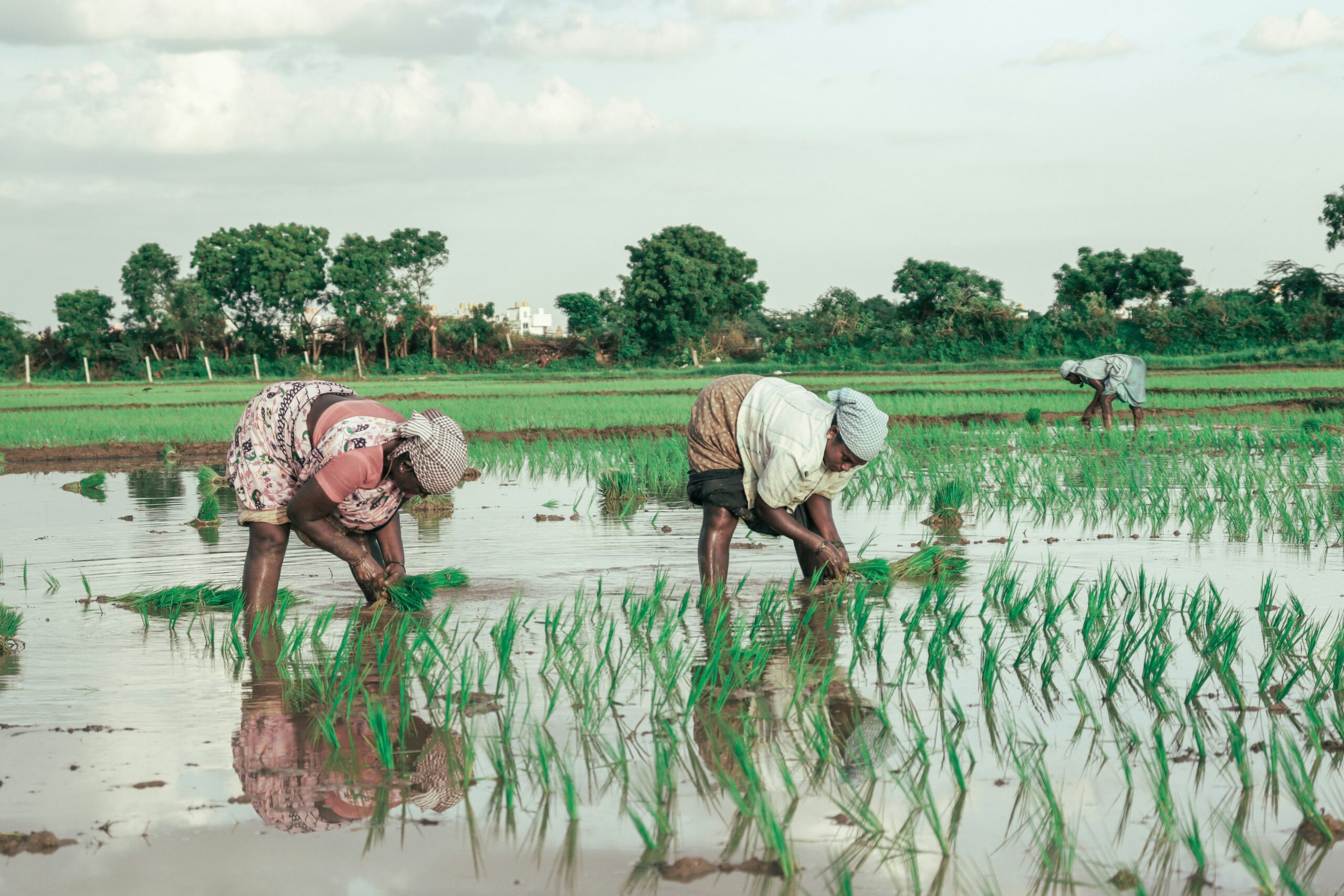
Farming accounts for roughly 70% of global freshwater withdrawals, and in South Asia that share rises to around 90%, a critical constraint as groundwater reserves continue to decline. Beyond water scarcity, Asia faces a range of structural risks, including depleted and compacted soils, rising input costs, widespread residue burning, and increasing yield volatility driven by climate change. Nearly one-third of India’s land is already classified as degraded, while many districts across Southeast Asia are losing productivity due to salinity and erosion.
As a result, practices that rebuild soil health and reduce water use have a clear market pull. Regenerative approaches also reduce emissions and local air pollution, particularly in rice cultivation, where alternate wetting and drying (AWD) and direct seeding can lower water use by 20 to 30 percent and methane emissions by 30 to 70 percent without yield penalties. Additionally, bio inputs such as microbial inoculants and biochar, along with cover crops and residue management, enhance soil carbon and overall resilience.
We expect the fastest adoption in Vietnam’s million-hectare low-emission rice program, India’s water-stressed rice-wheat belt, and Indonesia’s irrigated rice areas, where governments, millers, and financiers are beginning to reward measurable outcomes rather than input volumes.


