
In the global pursuit of net-zero, few sectors have attracted as much strategic interest and posed as many complex challenges as hydrogen. Touted as a vital decarbonization tool for heavy industry, long-haul transport, and power storage, hydrogen has long been held back by one persistent bottleneck: how to move and store it at scale.
As reported by the World Economic Forum, researchers at the Argonne National Laboratory in 2019 revealed a striking insight: while hydrogen production costs account for just 15% of the final cost at the dispenser for hydrogen used in transportation, the remaining 85%—the so-called “hidden” costs—are often overlooked.
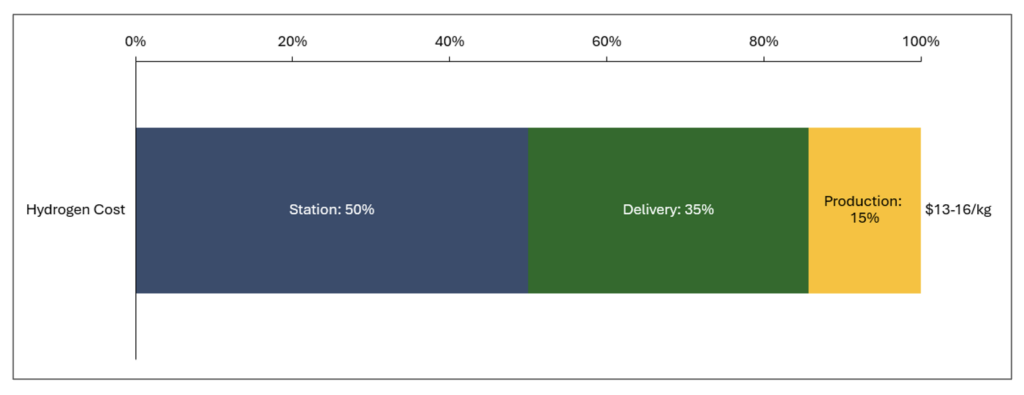
To make hydrogen-powered heavy-duty transportation economically competitive with diesel, these hidden costs must also be addressed. Reducing these barriers is crucial to unlocking hydrogen’s full potential in the energy transition.
Today’s most common methods—such as high-pressure gas cylinders or cryogenic liquid hydrogen—are costly, energy-intensive, and logistically difficult to deploy, especially across emerging and fast-growing markets. These infrastructure demands introduce friction that slows adoption and limits access, particularly where large-scale capital investment is impractical or infeasible.
But what if hydrogen didn’t have to be stored like ‘hydrogen’?
A Breakthrough in Hydrogen Logistics
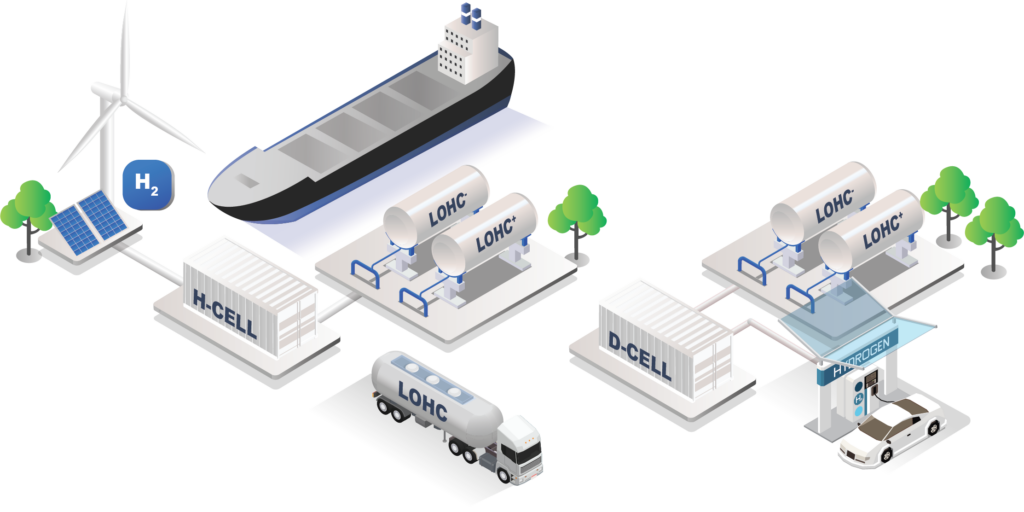
Ayrton Energy, one of Antares Ventures’ portfolio companies, is working to rewrite this part of the hydrogen story. Rather than transporting hydrogen in its elemental form, Ayrton uses a Liquid Organic Hydrogen Carrier (LOHC) approach—specifically, its proprietary e-LOHC™ system.
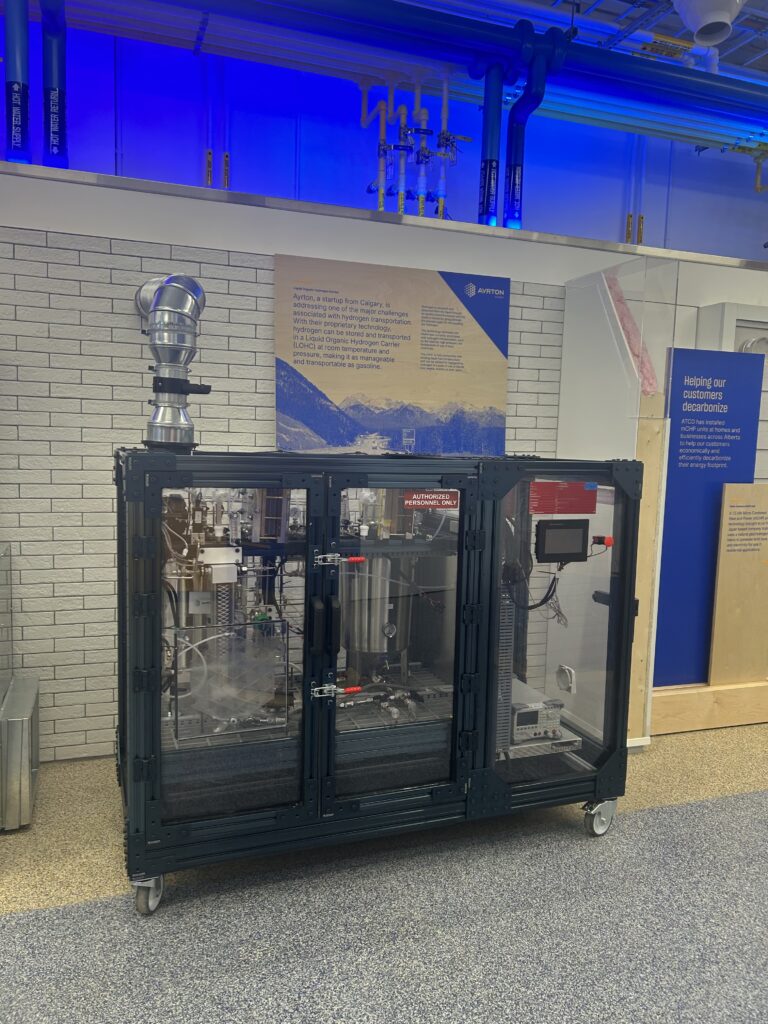
This method allows hydrogen to be stored and transported at room temperature and pressure, in a chemically bonded form, using liquids that behave similarly to existing fuels. It’s a major departure from traditional hydrogen logistics—and one that comes with practical advantages for safety, scalability, and cost-efficiency.
More importantly, it eliminates the need for expensive cryogenic or high-pressure systems, addressing two of the most persistent cost drivers in hydrogen supply chains.
Founded by mechanical engineer Natasha Kostenuk, P.Eng (CEO), and chemist Brandy Kinkead, PhD (CTO), Ayrton Energy brings together deep expertise in energy commercialization and advanced chemistry. With Natasha’s two decades of experience in scaling energy ventures and Brandy’s technical leadership in fuel cell and nanomaterials innovation, the duo is uniquely positioned to solve hydrogen’s toughest infrastructure challenges. Their combined vision and capabilities are turning a bold hydrogen concept into an investable, real-world solution.
Infrastructure-Ready by Design
Ayrton’s e-LOHC™ technology is built with compatibility in mind, designed to plug into the infrastructure we already have: liquid fuel tanks, road tankers, pipelines, and distribution systems. This infrastructure readiness enables easier rollout, reduces deployment friction, and accelerates hydrogen’s path to market, particularly in Asia’s rapidly growing industrial hubs.
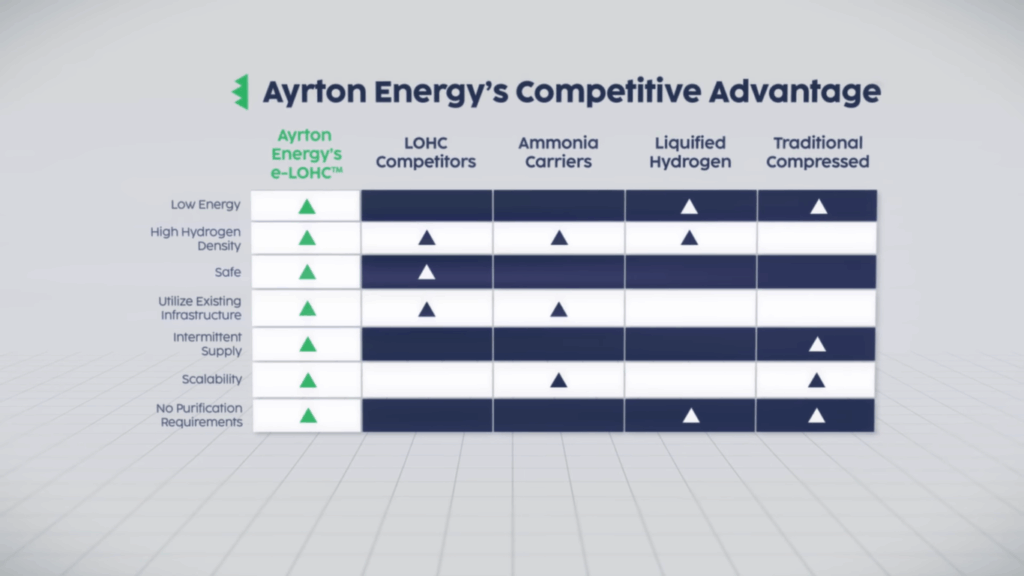
This is not just another concept; It’s a real-world solution in motion.
Ayrton Energy’s pioneering pilot project with ATCO Gas, now live at ATCO’s Fort Saskatchewan Operating Center, brings their e-LOHC™ technology to life. As one of the largest Canadian natural gas companies, ATCO Gas delivers safe, reliable natural gas distribution services to more than 1.3 million customers in Canada and Australia. The milestone project is being showcased recently during Canadian Hydrogen Convention in April 2025 and demonstrating Ayrton’s innovative e-LOHC™ technology.

This pilot is proving that hydrogen can be safely stored and moved at scale without waiting for massive infrastructure overhauls. It’s a significant step toward turning hydrogen from a vision into a practical, scalable energy solution. Seeing it in action through site tours at Fort Saskatchewan shows that the future of hydrogen is already here.
From Alberta to Asia: A Signal of What’s Next
Looking back in September 2024, when Antares Ventures participated in Ayrton Energy’s $6.8 million seed funding round, we saw the potential of their innovative hydrogen storage and transport technology. As Asia accelerates its transition to a low-carbon future, hydrogen is becoming a cornerstone for decarbonizing sectors where electrification alone falls short. Ayrton Energy was a natural fit for our strategy of backing deeptech ventures that address critical gaps in the energy transition, and we’re excited to see their progress in Asia’s growing market.
On May 7, 2025, Ayrton Energy just became a winner on Temasek Foundation’s The Liveability Challenge, one of Asia’s leading platforms for sustainability innovation. They’re also the winner of the 2025 Alberta Cleantech Awards, recognized for their leadership in venture innovation.
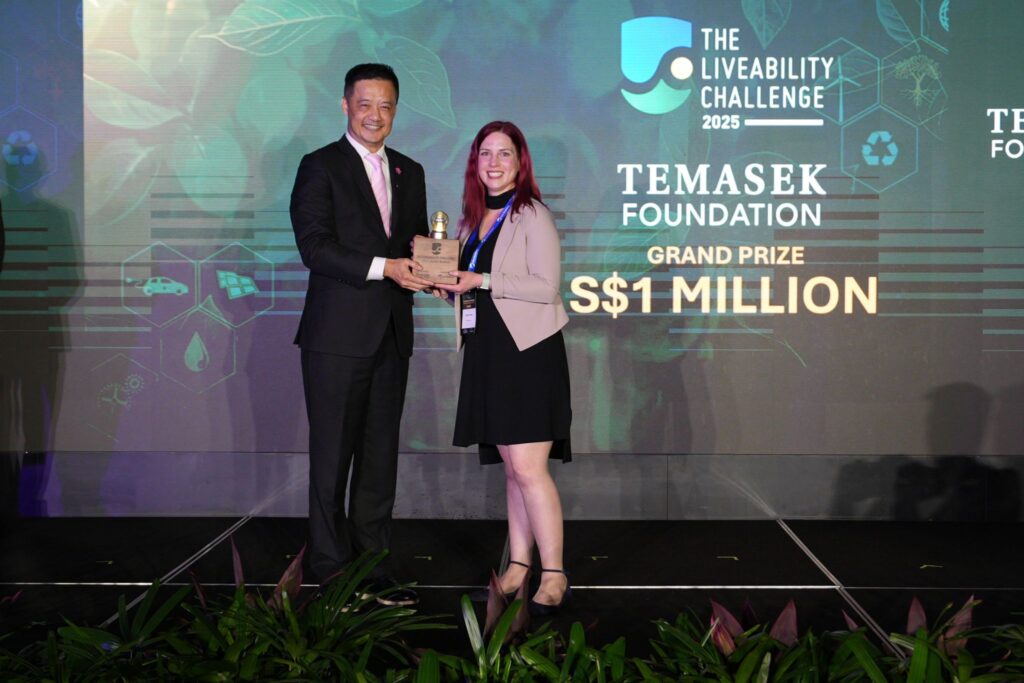
These moments highlight the increasing recognition of their approach and the growing relevance of their work, particularly in the Asia Growth Market. As Brandy mentioned during the final celebration, “We’re really excited to be able to have this funding support and cement our position in Singapore and Southeast Asia.”
But more importantly, they represent a broader signal: hydrogen is entering a phase where technology, infrastructure, and investment are finally beginning to converge. The companies solving real-world challenges, quietly and practically, are the ones worth watching.
Singapore is rapidly cementing itself as a global hub for deep tech innovation, particularly in Artificial Intelligence (AI), computing infrastructure, and sustainability-driven solutions. As the nation strengthens its investments in cutting-edge technology, the challenge remains—how do we transform scientific breakthroughs into scalable ventures that drive real-world impact?
At Antares Ventures, deep tech is our only focus. Our selection as a co-investment partner by SEEDS Capital reflects our commitment to accelerating the commercialization of frontier technologies in Singapore and beyond. With our deep expertise and market access across Asia Growth Markets, we help founders bridge the gap between innovation and scalable deployment.
Our Partner, Louis Muruyama, shared his insights on Singapore’s evolving deep tech landscape in SEEDS Capital’s latest feature:
“Singapore is quickly becoming a key hub for Artificial Intelligence (AI) innovation, with strong investments in computing infrastructure. At Antares Ventures, we are particularly interested in frontier technology for humanity, while focusing on technologies that support this growth, such as optimising computing resources, integrating renewable energy solutions, and reducing environmental impact from energy consumption to water usage in cooling.
Singapore’s existing strengths in biological sciences are being further enhanced through AI. We also see great potential in leveraging AI to enhance agricultural productivity, not only benefiting Singapore but also driving broader economic impact across Southeast Asia and beyond.”
Amplifying Investor Impact with SEEDS Capital
A key highlight for our investors: Our investments in Singapore-based companies may now be matched by SEEDS Capital, amplifying both our impact and fund returns. This co-investment scheme is designed to address the inherent risks of deep tech investing, particularly the longer development cycles, by encouraging public-private sector partnership in these high-potential yet underfunded areas.
Together with SEEDS Capital and our ecosystem partners, we look forward to accelerating the next wave of deep tech breakthroughs, helping transformative technologies reach the market faster, scale globally, and create lasting impact in Asia Growth Market.
Learn more about our commitment to deep tech innovation and investment in Singapore here.
At Singapore Maritime Week 2025, Michael Gryseels, Founder and Managing Partner of Antares Ventures, joined a panel hosted by the Australian Trade and Investment Commission (Austrade) to explore how deep-tech innovation is reshaping the maritime industry across Southeast Asia.
With Southeast Asia managing over 25% of global trade and the maritime sector contributing 15% of regional GDP, the region is under increasing pressure to adopt smarter, more sustainable solutions. Issues such as port congestion, rising environmental concerns, and tightening regulatory standards are creating a clear demand for innovation—and setting the stage for a new era of transformation powered by deep technology.
Why Southeast Asia, Why Now?
In a discussion titled “Opportunity in Maritime: Why SEA, Why Now?”, Gryseels highlighted the region’s strategic role in global shipping, noting that the Straits of Malacca alone facilitate a quarter of the world’s trade. Despite this significance, maritime tech investment remains relatively modest compared to sectors like fintech or enterprise AI—pointing to both a gap and a unique opportunity for early movers.
“Port congestion across Southeast Asia leads to 32% longer vessel waiting times,” Gryseels remarked. “The inefficiencies are real—but so are the opportunities for technology to redefine operations, sustainability, and resilience.”
Key Innovation Themes
The presentation outlined four major innovation themes that are already gaining traction across the region:
1. Green Shipping & Clean Energy
Electric propulsion, carbon capture, and next-generation fuels such as ammonia and methanol are becoming critical components of decarbonization strategies.
2. Supply Chain Digitalization
Technologies like IoT, AI, and blockchain are enabling smarter port operations and real-time supply chain visibility.
3. Autonomous & Remote Operations
Emerging tools—from uncrewed surface vessels (USVs) to AR-powered remote inspections—are set to revolutionize how fleets are managed and maintained.
4. Marine Biodiversity & Ocean Intelligence
Innovations in ocean monitoring, sustainable aquaculture, and pollution mitigation are essential to preserving Southeast Asia’s fragile marine ecosystems.
Bridging Innovation with Investment
Antares Ventures, a Singapore-based venture capital firm focused exclusively on deep-tech, is actively investing in early-stage startups addressing these maritime challenges in the Asia Growth Market. Its portfolio includes:
1. Open Ocean Robotics: USVs enabling remote ocean data collection
2. Photon Marine: Electric propulsion systems for workboats and ferries
3. enaDyne: Power-to-methanol technology supporting green shipping fuels
4. Umami Bioworks: Cultivated seafood solutions for resilient food systems
Despite growing interest, maritime deep-tech remains underfunded relative to its potential impact. According to Gryseels, achieving scale will require more than startup innovation—it will take committed collaboration between investors, corporate partners, and regulators to drive adoption at an ecosystem level.
Antares Ventures continues to play a catalytic role in this space, leveraging its deep-tech expertise and strong regional networks to accelerate the commercialization of transformative solutions for Southeast Asia and beyond.
Learn more about our deep-tech investments and market focus in Asia Growth Markets in Michael’s presentation below
Antares Ventures-backed Open Ocean Robotics has officially launched its first commercially available uncrewed surface vehicle (USV), DataXplorer Gen 2, marking a significant step in the commercialization of autonomous maritime technology.
With Southeast Asia handling 25% of global trade and being home to four of the world’s top 20 container ports, maritime innovation is no longer optional, it is essential. However, port congestion, environmental pressures, and regulatory mandates such as IMO 2030’s 40% emissions reduction target are driving the urgent need for smarter, more sustainable solutions.
Led by CEO and co-founder Julie Angus, Open Ocean Robotics is addressing these challenges with autonomous, solar-powered USVs designed for maritime security, environmental monitoring, and offshore operations. The newly launched DataXplorer Gen 2 builds on the company’s existing capabilities, offering enhanced endurance, improved sensing and data collection, and greater autonomy for long-range deployments. This allows for scalable, real-time ocean monitoring without the costs, risks, or emissions of traditional crewed vessels.
DataXplorer Gen 2: Smarter, Sustainable Maritime Monitoring
DataXplorer Gen 2 is an autonomous, solar-powered, uncrewed surface vehicle (USV) designed for persistent ocean monitoring across coastal and open-sea environments. With a zero-emission design, long endurance, and self-righting capability, it is ideal for maritime security, environmental monitoring, hydrographic surveys, and scientific research.
Equipped with AI-powered detection systems, it can identify non-AIS vessels, classify underwater acoustic signals, and provide real-time ocean intelligence through its Enhanced Horizon and Underwater Listener technologies. The XplorerView cloud platform enables live data access and remote mission control, ensuring efficient, data-driven decision-making.
With a modular design, DataXplorer Gen 2 adapts to various mission needs, making it a versatile tool for maritime operations and sustainable ocean management.
Antares Ventures: Unlocking Market Adoption for Deeptech
While deeptech breakthroughs are transforming industries, the path from innovation to large-scale adoption remains challenging. Successful commercialization requires more than just funding, it demands strategic partnerships, market access, and regional expertise.
Antares Ventures, which co-led Open Ocean Robotics’ investment in 2023, has been actively facilitating the company’s expansion into Asia Growth Markets, where demand for maritime monitoring, blue economy innovation, and ocean sustainability is rising.
“Deeptech commercialization is not just about capital, it’s about finding the right partners and markets to scale innovation effectively. With Southeast Asia’s vast coastlines and maritime trade corridors, there is an urgent need for efficient ocean robotics solutions that can support sustainability and security goals.”
The Role of Strategic Partnerships in Scaling Ocean Tech
The launch of DataXplorer Gen 2 highlights the importance of investors, industry stakeholders, and policymakers in bringing deeptech solutions to market. By aligning breakthrough technologies with real-world needs, Antares Ventures helps accelerate the adoption of solutions that address some of the most pressing global maritime challenges.
With DataXplorer Gen 2 now available, Open Ocean Robotics is poised to drive real-world impact: enhancing maritime security, enabling environmental protection, and optimizing offshore industrial operations. These innovations are particularly relevant in Asia Growth Markets, where autonomous solutions can improve border security, illegal fishing surveillance, marine biodiversity monitoring, and the efficiency of offshore energy projects.
Watch the launch video below to see the DataXplorer Gen 2 in action, and contact them for more info.
About Open Ocean Robotics
Open Ocean Robotics is a leader in autonomous ocean data collection, providing solar-powered uncrewed surface vehicles (USVs) that operate at sea for months, collecting real-time data without emissions, fuel costs, or risk to human crews. Its solutions support applications in maritime security, environmental monitoring, and offshore operations—helping industries and governments make informed decisions while reducing the environmental footprint of ocean data collection.
About Antares Ventures
Antares Ventures is a Singapore-based deeptech venture capital firm investing globally in breakthrough innovations that address the critical challenges of Asia Growth Markets. As a strategic partner to early-stage deeptech startups, Antares Ventures provides capital, regional insights, and corporate networks to scale transformative technologies. The firm focuses on decarbonization, energy transition, mobility, maritime, and the future of humanity, working closely with governments, corporates, and institutional investors to accelerate deeptech commercialization.
Antares Ventures is expanding its global reach through a strategic partnership with Innovate UK, the UK’s leading innovation agency. As part of the Investor Partnerships Future Economy programme, this collaboration strengthens our commitment to scaling deep tech startups and driving investment into high-growth, cutting-edge technology ventures.
Why the UK Deep Tech Ecosystem?
UK is a powerhouse for deep tech innovation, backed by a strong talent base, world-class research institutions, and a thriving startup ecosystem. According to the Royal Academy of Engineering’s State of UK Deep Tech 2024 report1, the UK deep tech sector has consistently attracted over £5 billion in annual VC funding since 2020. In the first half of 2024 alone, £3.6 billion was raised across 500+ transactions, signaling sustained investor confidence.
From quantum encryption and advanced semiconductors to biodegradable seaweed plastics, UK-based deep tech companies are tackling some of the world’s most complex challenges and transforming industries at a global scale.
Scaling Deep Tech from the UK to Asia Growth Markets
Through Innovate UK’s Investor Partnership Programme, Antares Ventures is forging key alliances to support high-growth UK SMEs innovating in Net Zero, Digital & Technologies, and Healthy Living & Agriculture. This initiative aligns grant funding for R&D development with private investment, bridging the gap for deep tech companies looking to scale beyond local markets.
By leveraging our expertise and network across Asia Growth Markets, we aim to accelerate the commercialization of UK-based deep tech solutions, helping startups expand their footprint where innovation is needed most. At Antares Ventures, we actively invest in global deep tech companies, including those from the UK, by guiding them through market entry, scaling operations, and forging long-term partnerships in Asia Growth Markets.
As we continue strengthening our global partnerships, this collaboration marks a significant step in bridging ecosystems, scaling innovation, and driving impact at a global scale.
Learn more about Innovate UK and its Investor Partnerships Programme here.
Footnote:
- Royal Academic of Engineering, State of UK Deep Tech report 2024 (2025) ↩︎
“The biggest sustainability challenges are in Asia, and so are the biggest market opportunities.”
In a recent MaRS Discovery District interview, Our Founder and Managing Partner, Michael Gryseels, discussed Canada’s Cleantech Advantage and shared a key insight: Asia holds both the biggest sustainability challenges and the strongest market opportunities. Michael has been investing in deep-tech Canadian startups since 2019.
With 65% of the Southeast Asia region still powered by coal and 50% of the world’s geothermal reserves, the demand for proven clean energy solutions is accelerating. At the same time, companies that have solved similar problems elsewhere are looking to expand into Asia’s Growth Markets—where scale and impact go hand in hand.
At Antares Ventures, we’ve backed Canadian deep-tech companies (including Open Ocean Robotics and Ayrton Energy) along with other global companies in their expansion journey and we plan to support more. Our value creation focuses on helping them navigate market entry, scale operations, and establish long-term partnerships in Asia’s Growth Markets.
Asia’s industrial base, strong policy momentum, and accelerating demand for sustainable solutions make it a critical ground for cleantech innovation. As Michael highlighted in the interview, companies that have solved similar challenges elsewhere now have an opportunity to scale in Asia’s Growth Markets, where real market needs meet transformative impact at scale.
What do you think about this global shift in cleantech expansion?
You can hear the full episode below on Youtube. For more on how conviction shapes early decisions, follow our insights on LinkedIn.
Prefer to read it in full? Below is the lightly edited transcript for deeper reading.
Leah (Interviewer): [Music] When it comes to clean tech, Canada continues to punch above its weight. So, to explore what’s behind this Canadian clean tech advantage, I’m joined by Michael Gryseels, Founder and Managing Partner at Antares Ventures, which is an early-stage VC firm out of Singapore that supports deep tech startups tackling sustainability challenges in Asia’s growth markets. So welcome!
And also, joined by Jason Blumberg, Co-Founder and Managing Director at Earth Foundry, which is a U.S. Venture Capital fund that invests in groundbreaking climate tech companies. So, welcome both!
Jason Blumberg (Earth Foundry): So, welcome both!
Michael Gryseels (Antares Ventures): So welcome!
Jason Blumberg (Earth Foundry): Thanks for having us.
Leah (Interviewer): Uh, so Michael, I’ll start with you. You founded Antares Ventures in Singapore to help companies around the world break into the Southeast Asia market. However, or, in good reason, a significant portion of your investment has consisted of Canadian companies. So, what is it about Canadian entrepreneurs that’s been exciting for you?
Michael Gryseels (Antares Ventures): It was, I think, never a deliberate strategy to invest disproportionately in Canada, but I think it’s where we found a combination of a couple of things. Number one, I think, is the founders, which, um, on average, we think are just of higher quality, higher determination, higher grit. And we found also, you know, both founders and co-investors that have a global mindset and, you know, have that global mindset early on in the venture, and that’s very important for us because our objective is to get them over to Asia.
Leah (Interviewer): And uh, I’m curious, just following up on that, Canadian cleantech companies are born exporters, we’re a pretty small country, uh, so we do, a lot of the times, the first contract is even outside of Canada. But what is Southeast Asia’s kind of cleantech need or competitive advantage, and, and why do you encourage ventures to go there?
Michael Gryseels (Antares Ventures): I, I think a couple of things. So, for example, 65% of the region is still powered by coal. Um, it is, unfortunately, doesn’t have wind energy. Even solar, people think it’s, you know, it’s tropical, so solar should be good, but it’s cloudy all the time because it’s very, I mean, it’s raining a lot. And so, we need our own solutions. And so therefore, we look at kind of which other countries have things that are similar or that, you know, technologies that we can transfer. For example, Canada has been a pioneer in geothermal energy. I mean, you’ve got E and other companies here. Southeast Asia has 50% of the world’s geothermal reserves. You have, because of again, combination of traditional industries and government support, you have a lot of oceantech. Southeast Asia has 200,000 kilometers of coastline. And so, we found that that, you know, that care for the environment in combination with tech is something that Canada has peered a lot. We found a lot of ocean tech companies here, even though the regions are very different, Canada has solved a similar problem, and, and so it’s, you know, and we have a market need. So, it’s a good, it’s a good export.
Leah (Interviewer): Jason, you’ve also made some investment in Canadian companies in your firm. We’ve gone through kind of how you do your due diligence. I mean, you’ve seen hundreds of pitch decks every single month, thousands of pitch decks every single month. So, what made Canadian ventures like your investment companies E Inc, next slight stand out?
Jason Blumberg (Earth Foundry): So, we’ll look at 2,000 innovations a year with a goal of trying to invest in a half dozen or so. And so, it’s a pretty big funnel down to find the right innovations. What we find about Canada, as mentioned, is this supportive ecosystem where you have the innovation, you have an interest in commercialization, then the tools are there to help think about what are those commercialization paths. So, when the innovation is getting close to being ready, it has a shot of moving forward. A lot of innovation never has a pathway to get there or it sits in a lab and no one’s thinking about that. And so, whether it’s programs you folks run like women in clean tech where you send folks into the, into the labs, or whether it is the, the universities thinking about how do I actually turn this into something, that doesn’t happen in a lot of institutions or cities or countries. And so, that pathway allows for things to be much closer to someone like us to be ready. It’s still a hard funnel because there’s a lot of things that are trying and, and, you know, a third of a percent of things to invest in is a pretty small number. But on a percentage basis, a much higher hit rating in Canada than other places.
Leah (Interviewer): We talk a lot about the lack of private, particularly early stage funding in Canada. And so, that means a lot of entrepreneurs need to find a way to scale bootstrapping or not much seed capital. In your experience as talking to companies, what impact does that have on the ventures as they scale, maybe Michael? I know you have some insights here.
Michael Gryseels (Antares Ventures): I, I think, I mean, it’s, uh, I actually think it leads to ultimately stronger ventures. And why is that? Let me just give you some examples. I’ve seen founders here on one hand being far more committed to the ventures. Several of the companies, uh, like we were amongst the first investors in Summit Nanotech, uh, the founder Amanda mortgaged her house to start up that company. Um, you know, the funders are far more resourceful because they, they can’t get as much of that pre-seed funding from the local ecosystem, so they try to stretch every dollar more by on one hand, you know, being lean in, in how they operate and also leveraging to the fullest extent government support that exists in various forms. And I think thirdly, I think it is actually driving them to commercialize earlier, um, because the larger funds would only come in once the revenue is, you know, the the ventures start to generate revenue. So, I find in general that there is a commercial focus. So, I think overall, I think it makes them more resilient, more productive from a capital perspective, and more commercially focused, more internationally focused than, than perhaps the same ventures on, on, on the southern side of your border. Let you comment on that, but I think it’s, it’s some optimism to bring to a challenge that that we see quite often.
Jason Blumberg (Earth Foundry): Sure. Yeah, I think that, uh, some of the government programming that supports from non-dilutive helps get them farther along. I do think that there is a big gap overall, and so it may make them more resilient or productive and it, it does help from a venture perspective that the valuations aren’t as high. So, as you go through the steps, you can have a higher chance of success because if you start at a high valuation and you don’t achieve things, you go, you end up going bankrupt, and if you low, you have a much better potential for moving forward, so that’s positive. On the negative side, what we see is there’s not much institutional support to support early stage venture funds. There is later stage, people are starting to get into that area, and that’s not just in Canada. It is more in Canada, but in the U.S. a lot as well. In this space, people have lost a lot of money over time. The investors are usually new, and so they back get some money together, they lose the money, and then people don’t want to do it again. So, I think being thoughtful about our space more generally and how do you convert these into opportunities is key, and then backing these early stage companies, uh, needs to happen to really get them going, and that starts with the decision makers and Pension funds more generally allocating some money and saying, I’m going to do this because there’s a lot of reasons for it, and that’s, that can be hard for the person making the decision because it’s the end of the day, they are an individual decision maker whose job is on the line as how is your returns in performance, and if it’s not good, then their jobs are not going to be available to them. So that’s, it’s, it is a hard situation.
Leah (Interviewer): So, on that then, spinning kind of our, our lack of early stage private capital is potentially, you know, building more resilient companies, ones that are financially responsible. You can may say any other advice on how Canada’s ecosystem could Foster more world-leading, uh, climate companies?
Jason Blumberg (Earth Foundry): Yeah, that’s a great answer. I think as we interact with all the ecosystems in North America and globally, we get a lot of questions of what are the ecosystems that we should Benchmark against and try and look at to to see. And, uh, Canada, Mars, Toronto, a great ecosystem. So, we often point to a thoughtful approach that Canada’s taken to Think Through each part of the value chain and how do you plug again to to each of those where there’s significant support, uh, is from the research University all the way through late stage companies, there’s support. So, Mars plugging in there at the early stage and figuring out a lot of that is great. When we get to, uh, and and we discuss this, the followon funding, that followon funding can be more challenged, but that’s because the amount of capital it takes to do that and the risk capital and the type of person that it takes to do that is limited because you need experience in in that area. And so, making sure that there’s the support mechanisms post whatever you guys do is key to helping, uh, build out the ecosystem there. Traditionally, has been support in non-dilutive capital, which has been very helpful to attract investors and also get the companies to the next stage, continuing on that is an important part of delivering on a successful outcome. And then having institutions that will support folks like us to invest in those type of companies is key as part of that as well, and I think the ecosystem could benefit from having more of that, uh, that type of capital come to the market.
Michael Gryseels (Antares Ventures): Yeah, I’m going to comment from my vantage point, which is that, um, I think Canada is a hot spot for innovation, particularly in clean tech. It’s a small market, and so I think your founders need to think global on day one. I think that’s the good thing. I think the question is like what support do they have? I, you know, it seems to me that still a lot of the investors here are local sort of kind of, you know, how do, how do you attract more global players to come to Canada and kind of ecosystems that should be an example for Canada is like Israel or, you know, even Singapore. Like, basically they don’t have a big global market, but they want to be Global beacons of innovations and they spend a lot of effort for getting Global Capital to come into that market. I mean, that’s up to the entrepreneurs to be looking. We’ve invested in Summit Nanotech. We, you know, we’re in there with Tamas and with Capricorn from us in a, and energy, we’re again there. It’s a global mix, so we’re two Asian investors, uh, one U.S. investor, and MBDC, but I would say they’re probably still the exceptions of Canadian founders that have that kind of global cap table. But I think, yeah, the orchestration of how do you get Global Capital to come to Canada? How do you get your founders and your ecosystem to, to take a global, you perhaps even more in this world because there are opportunities Beyond North America of their companies. So, that would be my advice.
Leah (Interviewer): Suggestions then to founders, if they do have that Global mindset, which I will say, I mean, if you want to do anything in Canada, you have to have a global mindset, how do they impress you guys as international investors? What would you be looking for to be to be impressed by, by one of our founders?
Jason Blumberg (Earth Foundry): So, Venture typically follows a hype cycle on a segment and so wherever there’s a segment, especially if the segment is not that technology heavy, it’s more business model heavy, they’ll follow the hype cycle and go there. And so, Capital just moves to those areas. AI, before that climate fit in for a little bit after Big Data as apps were trending down some as software’s trending down some. So there was a movement there with the IRA and with some of the actions that were happening around the environment that drove that, that’s kind of no different than when we had era in 2009. So when President Obama did the stimulus, there was a similar type of environment where you had a lot of capital going and a lot of value destruction. What I don’t see as much as a lot of bad decisions that were made that will cause a lot of value destruction. So, it won’t be as rental to the industry, the hype cycle that that happened, but it will be harder to get Capital, there’ll be less crossover investors, it just means you need to be more Capital efficient to make smarter decisions as you look at how you build your companies because there’s there’s always two ways to build a company and we we went back to this with Canada that you can build a company, uh, efficiently managing your Capital stack or you can put as much money as possible into to see how quick you can go and that model hasn’t really worked well, uh, and commodity spaces it hasn’t worked well. Solar before hydrogen, now we have some of that wash out that will happen and so, you know, if you invested in hydrogen, you’re probably not going to be happy, there’ll be a few wins, maybe yours will be, um, but, but, uh, but in general, you’ll have some wash out in certain sectors. So that will cause a little more retrenchment, but overall, we’ve got a much better set of assets, we’ve got a much better set of entrepreneurs, better set of invest ERS than we had during the last crash. And so, it will endure going forward. We also have a lot of crossover or a lot of corporate investors that have come in. Those corporate investors don’t appear to be going away. It’s always was a question of would they disappear, but they lack Innovation as companies generally and so open- Source Outsource Innovation helps fill some of the gaps on that. None of those companies are are struggling in general as as a pool. So because of that, they’ll continue the open Innovation it’s worked for a long time now and so we’ll continue to see that. So corporations coming in fill the void, but overall, there will be kind of less excited Capital that comes in when you have the hype cycle that happens.
Leah (Interviewer): So, you’ both invested in a few Canadian companies, but any advice on how Canada’s ecosystem, how we can Foster more world leading climate Ventures that will grab both of your attention?
Michael Gryseels (Antares Ventures): I’ll say two things. So, first I think on AI, I think AI is critical also for hardware companies. We have in our portfolio, I’ll just give you three examples. We have a company that has a a battery management system that is totally using AI to optimize the lifespan, the range performance of of of a battery in the context of a vehicle. It’s combination of hardware and software. We’ve got an autonomous, I mean open oce robotics uses AI for autonomous navigations of its vat. We just invested in an electric plane company that uses AI to land. I think that actually AI is going to be critical even in, you know, hardware, uh, Investments as the first reaction I want to have. The second is on the question is whether Capital has disappeared. I think there’s two things. I think there’s been the general micro which I think has just kind of led to more risk aversity and obviously what people are concerned with Hardware is the I muge amount of capital that it will require in manufacturing in projects, Etc. And so, you know, just a higher cost of capital with interest rates that have gone up and and and the switch from from risk on to risk off, I think has just not helped. You know, I I don’t have a crystal Bo, I don’t know, you know, many people have opinions what is going to happen to Industries, but, uh, hopefully over time you’ll see more risk tolerance and risk cap. And obviously, you could even say that some of the I companies have kind of defeated that because they also need a lot of capital and they manage to get it. And I think the second thing is that there’s right now, I think particularly with the US elections, there’s uncertainty around how, you know, what’s going to happen policy-wise to climate transition. I hope that uncertainty goes away quickly and then things will, you know, because just the last thing investors just hating uncertainty and so I feel like a lot of funds are just standing on the, you know, waiting to invest because they don’t know how things will play out.
Jason Blumberg (Earth Foundry): So exit activity comes from two ways. It comes from exits to corporations or it comes from exits to IPOs. And so the corporation and IPO Windows have been kind of closed in the US because of Overlook overlooking on a lot of these companies. There may open up some, uh, in the near future and that could be beneficial. I think the second thing is it’s company dependent. So if you’ve over capitalized an asset to its value, your exit potential decreases or you take a much lower return. And so folks will continue to fund assets that haven’t met the valuation that they want hoping they’ll grow into it. It’s like buying clothes that are too big and hoping you’ll grow into it. It’s probably not the right choice, but what a lot of people have done. And so if you’ve built a company that has steps of valuation that have exit points all the way along, then you have a lot more options. And so those exits are much more likely to happen circling back the Canadian companies being valued reasonably being efficient much more likelihood of exit options, uh, on the horizon for those type of businesses.
Leah (Interviewer): Over the past year, we’ve seen a lot of talk about AI, spoken with a lot of investors that are interested in climate, but it’s much more Capital light AI all over the place type of of climate Solutions. So after the 2021 to 2022 climate Tech investment boom that we saw so many more players in this space, I mean, I’ve been in the space since 2014, not many investors at that time, so it’s awesome to see how many are here. But do you think now climate hard tech innovations are being overlooked? I know not from either of you since that your that’s your thesis, but have you seen more investors getting this space larger syndicates that you can put together, um, or how has that moved within the recent years?
Michael Gryseels (Antares Ventures): Yeah, so I agree with a lot what Jason said LPs are primarily corporates. Um, we are working I mean and Beyond rlps we’re working with more, I think the climate, there’s a lot of corporat that have understood whether they were in energy or not that sustainability as a business and that want to kind of, you know, diversify or add that as, you know, as something into their portfolio and we as a fund actually one of the things we try to do is is to try to get corporates in as soon as possible. Sometimes it is, you know, to just kind of get that initial proof concept, but more importantly is to have sources of capital and strategic partners that are less, you know, depending on the cycle and overtime could even be, uh, um, you know, exit opportunities and and to your question on timing, we try to get these corporates in early. Then obviously there’s a way to do it that none of those Corps become too dominant in the direction of the company, uh, so for us it’s by us as a funding there and and keeping them as an LP and then facilitating commercial collaboration or if they come in it’s, you know, we try to work with corporates that have a professional Venture arm and understand, you know, what they what a startup needs to to drive and and and just making sure that we’ve got that balance between an independent, uh, direction for the startup that maximize the value for everyone and and and the Strategic support for the corporate, whether that’s to Capital, to commercial synergies, or to, you know, taking off for example. And I I firmly believe that in this new environment Founders and startups need to think about how they build a more asset light, um, so you know, you can be a hardware company without needing a manufacturing plant, you don’t need to go into project development yourself. So I think, you know, when when all the capital was there, you know, I think companies, you know, back to, you know, they the clothes are too big like they they try too much and I I I think at the end the if you look very clinically at most of these startups, their core differentiating and you know, value at is in on the R&D front, they’re frankly not good in manufacturing, they’re frankly not good in project development and so I think to find out it takes time and I think it’s something that needs to be done early, you need to think through about what’s the corporate structure, how do you leverage of balance sheet capital from Partners or from, you know, third party financiers to scale the company I think and again that leads to ultimately one more Capital productivity two valuations that are more reasonable and three it gives you optionality with respect to exit.
Leah (Interviewer): So I think the the last thing that we’re we’re also and when I say we’re Collective climate Global Investors and ecosystem that we’re missing a little bit is one increased Revenue generation, but also exit activity. Speaking with a lot of generalist VCS, that’s what they’re looking for is I haven’t seen enough proof that I can make a lot of money from this from this spot because of the lack of exit activity. So in both of your opinions what is needed to get clean teex solutions to that next level where we’re seeing increase Revenue generation and exits?
Jason Blumberg (Earth Foundry): I think whenever you think you’ve optimized your company as much as you can, if you’re going to take a lot more Capital than the value creation, then it’s it’s not a good time to take Capital. If that value creation can be significant, then you should take Capital. You know, if you sell a quarter of your company for $10 million, your value is now $40 million. So then the next time you do that, you need to turn that 40 million into 80 or 120 million. And then the next time you do that, you need to potentially be at 350 million. So if you can’t make those jumps, then it’s a good time to consider what your alternatives are.
Leah (Interviewer): And so do you think it is a question of for these Global challen is the Technologies exist it’s just a commercialization scale up problem or we still need to invent a lot of?
Michael Gryseels (Antares Ventures): No I I I mean I as I said in the 90% of the problems don’t have technologies that have unit economics to scale which just you know commercial capital and so I think for a lot of these challenges there is innovation but it’s not yet at the unit economics to truly scale, uh, without some some kind of financial support. So I think there’s scaling, but there is still Innovation that needs to happen.
Jason Blumberg (Earth Foundry): So what we’re talking about is $14 trillion dollar in GDP, it’s an exceptionally big market and everybody wants a single solution, the silver bullet, and what we end up having to do is have lots of solutions which ends up being lots of opportunities for new innovation to make money for Market opportunities to solve those. And so if we go through the most pressing problems, there’s a number of great innovations that are coming to Market, there’s a number that are in the labs and there’s a number that people are working on on the early stage. So we’re very bullish on solving individual problems. We’ve just got a lot of problems to solve. It’s not it’s not one whether it’s plastic in the ocean or whether it is CO2 in the air or many other pollutants we put in the air, uh, every one of them, there’s folks working on these Solutions in Canada and North America globally and bringing those out doing it a lot better than we have before is important. And so having that customer pull the mindset shift and the Technologies all coming together is the key. And so making innovations that are much cheaper, much better is what you have to do and what we’re working on and they’re working on.
Leah (Interviewer): So last question, we’ll do a little bit of a rapid fire. If you to identify your top three areas of advice to give to entrepreneurs and Canadian ventures in particular looking to raise funds in the months ahead what what would you say what are those one two three words of advice?
Michael Gryseels (Antares Ventures): Think Global, Business Model, Capital efficiency.
Jason Blumberg (Earth Foundry): Talk to the customer and find out if you’re actually have a solution that they want. Understand your unit economics and whether you’re 10x better than what the market has or at least 5x and then number three understand all the Milestones you know need to achieve from where you are today to what that customer wants.
Leah (Interviewer): Those are awesome advice. Well thank you both for for joining us today. Yeah thank you for yeah great thanks so much appreciate it.
Antares Ventures is proud to announce its participation in IONATE’s oversubscribed $17 million Series A funding round, alongside AlbionVC, IQT, JGC MIRAI Innovation Fund, and Santander InnoEnergy Climate Fund. The investment will support the growth of IONATE’s transformative smart grid technology, which promises to revolutionize energy infrastructure globally.
IONATE, a deep-tech innovator, has developed the Hybrid Intelligent Transformer (HIT) and the Aurora Platform—cutting-edge solutions designed to optimize power flow and integrate renewable energy into power grids. As energy systems across the world struggle to keep up with the demands of modern energy needs and decarbonization, IONATE’s technology offers a much-needed solution.
Michael Gryseels, Managing Partner at Antares Ventures, said,
“We are thrilled to partner with IONATE and support its expansion to Asia’s growth markets and unlock its potential to transform Asia’s power infrastructure with ground-breaking technology that makes electricity grids smarter, more resilient, and ready for the renewable future.”
Matthew Williams, IONATE’s Founder & CEO, said
“The IONATE team builds extraordinary tech with extraordinary timing. Just as national networks, industrial players and data centers realised how much of their progress depended on modernising their electrical infrastructure, we are ready to help them do exactly that. Resiliency, flexibility, and efficiency are key for our energy systems, and IONATE is uniquely positioned to strengthen all three. We are so excited to have some of the strongest VCs and strategic partners in our corner to realise this impact and begin transforming power globally.”
IONATE’s HIT replaces outdated transformers with smart alternatives that can detect and resolve power disturbances in real-time. With AI-driven control through the Aurora platform, IONATE’s technology is positioned to enable more efficient, resilient, and sustainable energy systems.
As the company expands into key markets, including Portugal, Spain, and the U.S., this funding will enable IONATE to scale its technology and continue its mission to modernize energy grids worldwide, especially in Asia’s rapidly growing economies.
About IONATE
IONATE is building the hardware-software backbone for smart grids. Its proprietary Hybrid Intelligent Transformer (HIT) replaces transformers with a smart equivalent, integrating high-fidelity data and precise control of voltages, harmonics, and reactive power all in one. This makes the HIT a Swiss Army knife for stabilizing power flows across grids, power generation, industrial assets, and data centers, while also lighting up real-time control nodes. Coordinated by IONATE’s AI-enabled software, they turn the passive, old grid into the smart decentralized energy platform we need for the 21st century.
A grid with IONATE’s tech can, on average:
1. Handle 33% more distributed energy resources (DERs like solar, EVs, heat pumps, etc.)
2. Carry 25% more power without upgrading poles and wires
3. Reduce wasted power by 6%
To learn more about this announcement and IONATE’s innovative smart grid solutions, visit IONATE website.
Antares Ventures is thrilled to announce that it has co-led a $14 million Series B funding round for The ePlane Company, India’s leader in electric vertical takeoff and landing (eVTOL) technology, alongside Speciale Invest. This investment marks a significant milestone in ePlane’s mission to revolutionize urban mobility with cutting-edge, sustainable aerial transport solutions.
Antares Ventures focuses on transformative deep-tech ventures that address critical challenges in Asia’s growth markets. ePlane’s vision of developing efficient, sustainable urban mobility solutions aligns perfectly with this commitment to supporting innovation that drives sustainability and progress. The ePlane Company’s pioneering eVTOL technology holds the potential to redefine urban transport and logistics, not only in India but across Asia and beyond.
The Series B funding will support ePlane as it takes critical steps toward its next phase of growth:
1. Expanding the commercialization of its drone and cargo eVTOL aircraft
2. Accelerating the development and launch of manned aircraft in India
3. Pursuing global regulatory certifications for international expansion
4. Upgrading its state-of-the-art prototyping and testing facilities to meet global eVTOL standards
Michael Gryseels, Founder and Managing Partner at Antares Ventures, said,
“ePlane’s commitment to innovation, sustainability, and technology-driven solutions positions them at the forefront of the eVTOL sector in Asia. We’re excited to collaborate with Satya Chakravarthy, the ePlane team, and our fellow investors to accelerate their growth and transform urban mobility. We are committed to supporting their next phase of growth as they commercialize their technology and make aerial transport and logistics a reality.”
Satya Chakravarthy, Founder and CEO of ePlane, added,
“Our focus on safety, sustainability, and innovation will remain at the core of our strategy, and this investment will enable us to bring aerial mobility closer to reality.”
Founded in 2019 by Professor Satya Chakravarthy and incubated at IIT Madras, ePlane aims to revolutionize urban transportation with a focus on creating compact, lightweight, and sustainable eVTOL aircraft. The company is developing the e200x—an eVTOL aircraft designed to provide up to 7x faster intra-city commutes and cargo transport, drastically reducing traffic congestion in urban centers.
With this new investment, ePlane is on track to meet its ambitious goals and continue to shape the future of urban air mobility in India and beyond.
About The ePlane Company
The ePlane Company is an innovator in the field of electric vertical takeoff and landing (eVTOL) aircraft. The company is dedicated to creating sustainable, compact, and tech-driven solutions for urban mobility, focusing on improving intra-city transport and logistics. Founded and incubated at IIT Madras, ePlane is leading the charge toward a future of efficient, green aerial mobility.
To learn more about this announcement and ePlane’s innovative eVTOL, visit The ePlane Company’s website.
Antares Ventures participated in Ayrton Energy’s $6.8 million seed funding round, supporting its innovative approach to hydrogen storage and transport. The round was led by Clean Energy Ventures and BDC Capital, with participation from EPS Ventures, SOSV, the51, UCeed Investment Funds, and Antares Ventures. This investment will help Ayrton Energy scale its proprietary liquid organic hydrogen carrier (LOHC) technology, expand its team, and grow its operations into key energy hubs in the U.S.
Hydrogen is expected to play a crucial role in decarbonizing industries such as aviation, shipping, and heavy manufacturing. However, its widespread adoption is hindered by high transportation costs and the lack of dedicated storage infrastructure. Ayrton Energy addresses these challenges with a novel LOHC system that enables safe, efficient, and cost-effective hydrogen storage and transportation using existing liquid fuel infrastructure.
The funding will enable Ayrton Energy to advance its hydrogen storage solution, which operates at low temperatures and pressures, offering a scalable and energy-efficient alternative to existing methods. The company is also deploying a pilot program in Alberta, Canada, with ATCO Gas to explore real-world applications, including integration with fuel cells and other energy systems.
A spokesperson from Antares Ventures said:
“Hydrogen is a key pillar in the transition to a net-zero world, given its ability to decarbonize ‘hard-to-abate’ industries like steel, cement, fertiliser, marine transport, and applications in many other sectors. One of the main barriers to scaling its impact has been the challenges of storing and transporting hydrogen, particularly in a future world where production will be decentralized.
As part of our comprehensive research, we were excited to discover the efficient, scaleable, and innovative LOHC solutions from Ayrton Energy. Ayrton Energy fits perfectly in our strategy of identifying promising deeptech ventures that address a clear gap in the energy transition of Asia’s growth market.”
Natasha Kostenuk, Founder and CEO of Ayrton Energy, added:
“Enabling the widespread production of clean hydrogen will be the backbone of an emissions-free future, and we believe our industry-agnostic solution will be a step in the right direction to democratize energy access globally. We’re grateful to our amazing cohort of investors whose expertise in scaling technologies commercially will be integral as we continue to grow our customer base.”
About Ayrton Energy
Headquartered in Calgary, Canada, Ayrton Energy develops an innovative hydrogen storage system designed for stable, long-term storage and transportation at room temperature. By leveraging existing infrastructure, Ayrton’s solution supports the global deployment of clean hydrogen for a more sustainable future.
To learn more about the announcement and the innovation, visit Ayrton Energy’s website here.